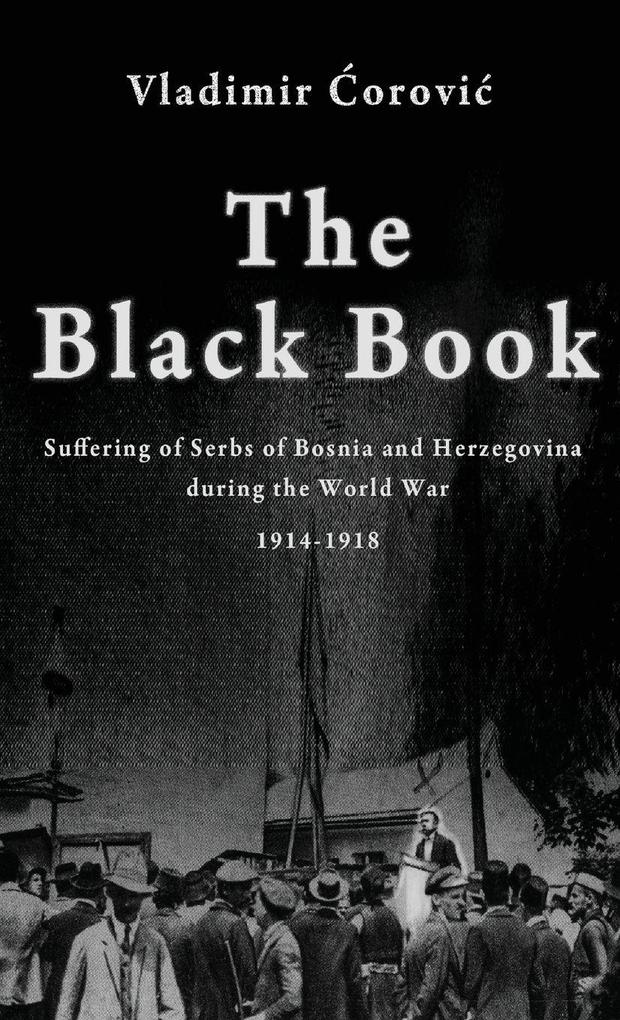
Vladimir ¿orovi¿ was born on October 27th, 1885, in Mostar, into a well-known Serb merchant family. He completed his elementary and high school education in his hometown, an environment with a strong and awakened Serbian national conscience shaped by prominent writers, including his brother Svetozar. In 1904, Vladimir ¿orovi¿ enrolled at the University of Vienna to study Slavic philology, archaeology, and history. His professors included famous slavists Vatroslav Jagi¿, Konstantin Jire¿ek, and Milan Rešetar.¿orovi¿ was very active in the Serbian academic society "Zora", about which he published a short book in 1905. He graduated from Vienna in 1908 with a thesis on Lukijan Mušicki. He continued his postgraduate studies in Munich (1908-1909) under the renowned German byzantologist Karl Krumbacher. He also spent time researching ancient Slavic manuscripts in Paris and Bologna.From September 1909 onward, ¿orovi¿ lived in Sarajevo where he worked first as curator and then as director of the library at the Land Museum. This period marked the beginning of his intensive and diverse scientific and literary work. He contributed significantly to various Serbian magazines such as Bosanska vila, Srpski književni glasnik, and Letopis Matice Srpske-the latter publishing his thesis on Lukijan Mušicki.In addition to these contributions, while living in Sarajevo he served as sector representative for the Serb educational and cultural society "Prosvjeta" and organised its calendar for 1911. After the assassination by Gavrilo Princip on June 28th, 1914 in Sarajevo, ¿orovi¿ was arrested by the Austro-Hungarian government. At the infamous "high treason" proceedings in Banja Luka, where Vasilj Gr¿i¿ was the main defendant, ¿orovi¿ was sentenced to five years in prison. The Supreme Court extended his sentence to eight years due to his intensive engagement with "Prosvjeta." In 1917, under strong pressure from international public opinion, the new Austro-Hungarian Emperor and King Karl I proclaimed an extensive amnesty for political prisoners. As a result, ¿orovi¿ was released from Zenica prison where he had been serving his sentence.He settled in Zagreb and began editing the magazine Književni jug with a group of Yugoslav-minded writers including Niko Bartulovi¿, Ivo Andri¿, and Branko Maši¿. During this time he also started notable collaborations with Yugoslav politicians in various countries, especially within Austria-Hungary. Additionally, he began preparing the documentary "Black Book" (Beograd & Sarajevo, 1920), which detailed the suffering of Serbs in Bosnia and Herzegovina.As a delegate for the provisional National Council, ¿orovi¿ was present on December 1, 1918, in Belgrade at the official proclamation of the unification of Serbs, Croats, and Slovenes into a common state.From 1919, when he was chosen as an associate professor at the Belgrade University's School of Philosophy, ¿orovi¿ continuously lived in Belgrade. Due to his great personal efforts and excellent scientific results, he created a rare level of reputation and influence and had an extraordinary career. In 1921, he became a full professor at the School of Philosophy; in 1922, he became an associate member of the Serbian Royal Academy; and in 1934, he became a full member. He also served as the rector of Belgrade University for several years.After the German attack on Yugoslavia, ¿orovi¿ left Belgrade and went into emigration with several prominent Yugoslav politicians. However, on April 12th, 1941, their aeroplane was shot down over Greece. In this accident, Vladimir ¿orovi¿ was among those who died.