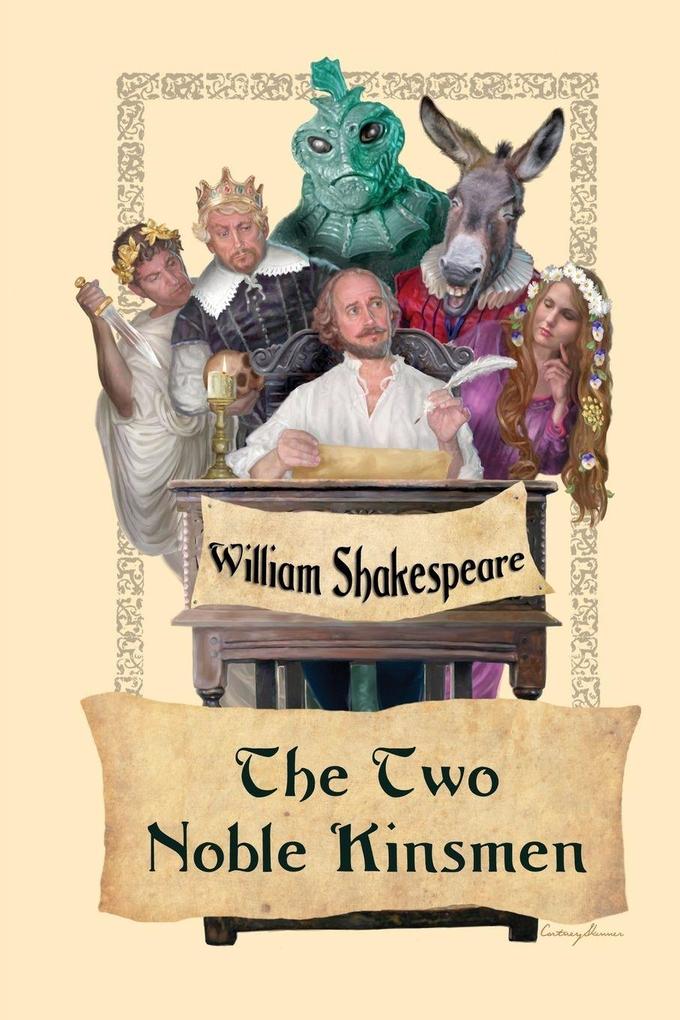
The Two Noble Kinsmen is a late Jacobean tragicomedy traditionally attributed to William Shakespeare and John Fletcher, blending courtly rivalry, romantic obsession, and fatal honour.
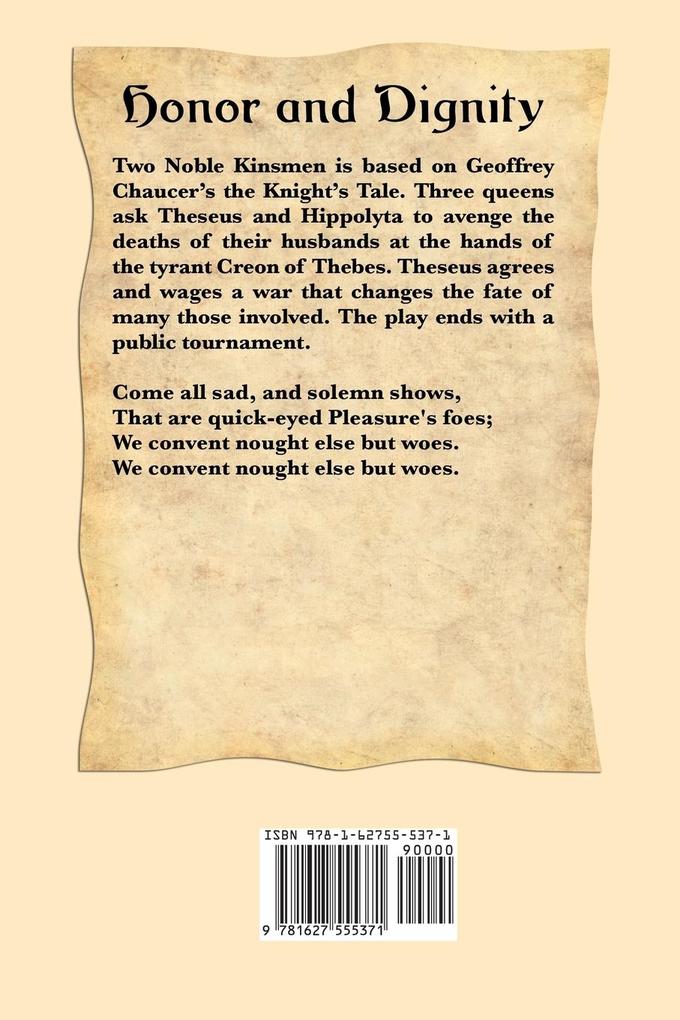
First performed in the early seventeenth century and published in 1634, the play draws its principal narrative from Geoffrey Chaucer's "Knight's Tale." It recounts the story of two imprisoned cousins, Palamon and Arcite, whose bond of brotherhood collapses when both fall in love with Emilia. What follows is a stylised contest of loyalty, jealousy, destiny, and martial spectacle, framed within a classical and chivalric setting.
The play occupies a distinctive position within the Shakespearean canon. Generally regarded as a collaboration with John Fletcher during Shakespeare's final creative period, it reflects the shifting theatrical tastes of the Jacobean era-combining romance, tragic rivalry, masque-like ceremony, and moments of psychological intensity. Its themes of honour, fate, and the fragility of friendship situate it alongside Shakespeare's late romances while retaining a harder edge of tragic inevitability.
Long debated in questions of authorship and style, The Two Noble Kinsmen remains an important text for scholars of Shakespeare's final phase and the collaborative practices of early modern theatre.