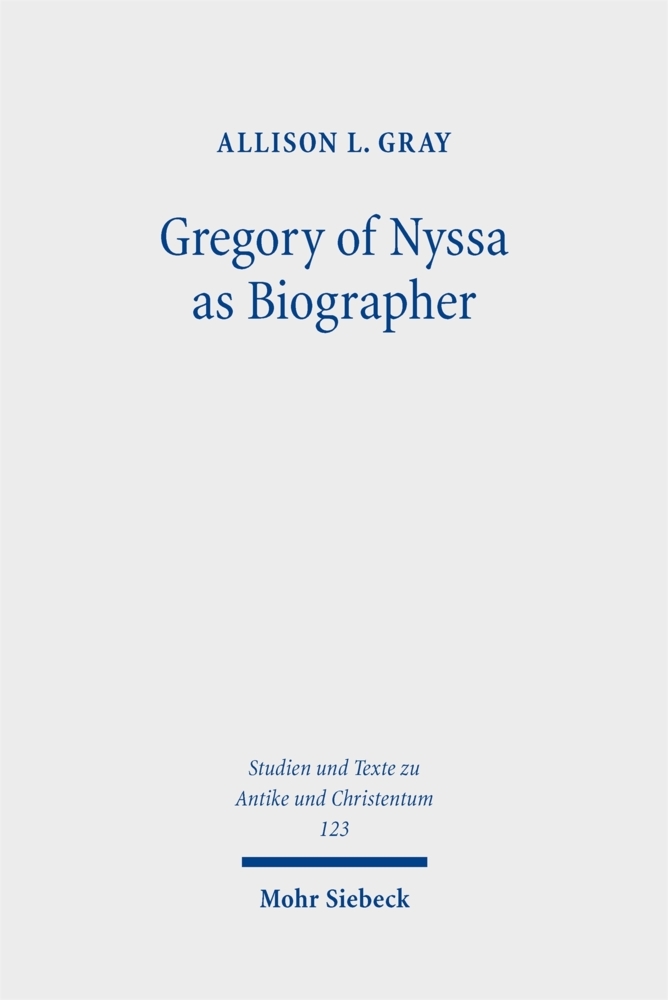
Der Theologe Gregor von Nyssa schrieb Biographien über seine Schwester, einen Bischof und Mose. Allison L. Gray zeigt, dass er in diesen Texten Techniken des griechisch-römischen biografischen Schreibens adaptiert, um Erzählungen zu schaffen, die sich für eine auf Tugend und Schriftauslegung konzentrierte spezifisch christliche Erziehungsform eignen.
In this study, Allison L. Gray analyzes three biographical narratives by the fourth-century Christian theologian Gregory of Nyssa (335-395 CE). When the Life of Moses, the Life of Macrina, and the Life of Gregory Thaumaturgus are examined in light of Greco-Roman rhetoric, biography, hagiography, and the history of education, it becomes evident that Gregory's attention to audience is critical to understanding the texts' form and function. Gregory recounts the lives of exemplary figures to inform his readers about lived virtue while simultaneously preparing them to be skilled readers and interpreters. He adopts and adapts familiar rhetorical and literary techniques to imagine, construct, and teach a new sort of ideal audience, training Christians to interpret Scripture. This study contributes to a more complete picture of how early Christian biographical writing shaped an emerging Christian paideia. Der Theologe Gregor von Nyssa schrieb Biographien über seine Schwester, einen Bischof und Mose. Allison L. Gray zeigt, dass er in diesen Texten Techniken des griechisch-römischen biografischen Schreibens adaptiert, um Erzählungen zu schaffen, die sich für eine auf Tugend und Schriftauslegung konzentrierte spezifisch christliche Erziehungsform eignen.