Bücher versandkostenfrei*100 Tage RückgaberechtAbholung in über 100 Filialen











Bald ist Valentinstag: 15% Rabatt11 auf viele Sortimente mit dem Code HERZ15
Jetzt einlösen
mehr erfahren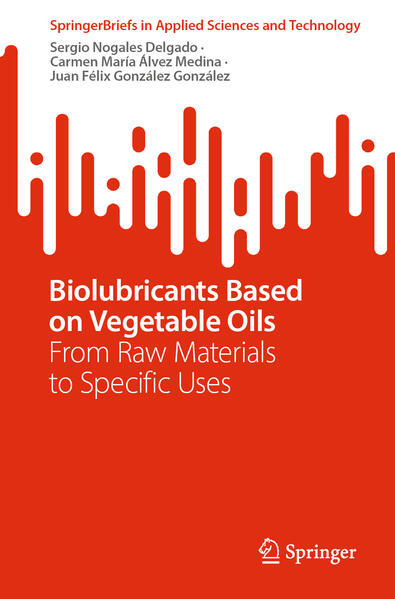
This is a book about biolubricants. It provides a general overview of these useful products, paying attention to their contribution to green and sustainable chemistry or the circular economy through the implementation of biorefineries. But also, it is a book about General Chemistry, Physics, Engineering, etc. , as this specific subject could act as a cornerstone for many multidisciplinary fields.
The book's chapters include several exercises and questions to track reader's learning and give general and specific idea of how biolubricants are not just a promising research topic, but also a practical reality. The main ideas covered in this work are the following: history, origin and use of biolubricants, main chemical routes to produce them and their quality assessment.
Inhaltsverzeichnis
Introduction: History of lubrication and why we need biolubricants. - Advantages and disadvantages (or challenges) of biolubricants. - Main raw materials, and the role of waste cooking oil. - Chemical routes to produce biolubricants. The role of biorefineries. - Biolubricant characterization. What is important to consider our product a good biolubricant? How do we measure it? . - Uses of biolubricants. - Cu ng edge research about biolubricants. - Conclusions and outlook.
Es wurden noch keine Bewertungen abgegeben. Schreiben Sie die erste Bewertung zu "Biolubricants Based on Vegetable Oils" und helfen Sie damit anderen bei der Kaufentscheidung.
