"Huxley uses his erudite knowledge of human relations to compare our actual world with his prophetic fantasy of 1931. It is a frightening experience, indeed, to discover how much of his satirical prediction of a distant future became reality in so short a time." - New York Times Book Review
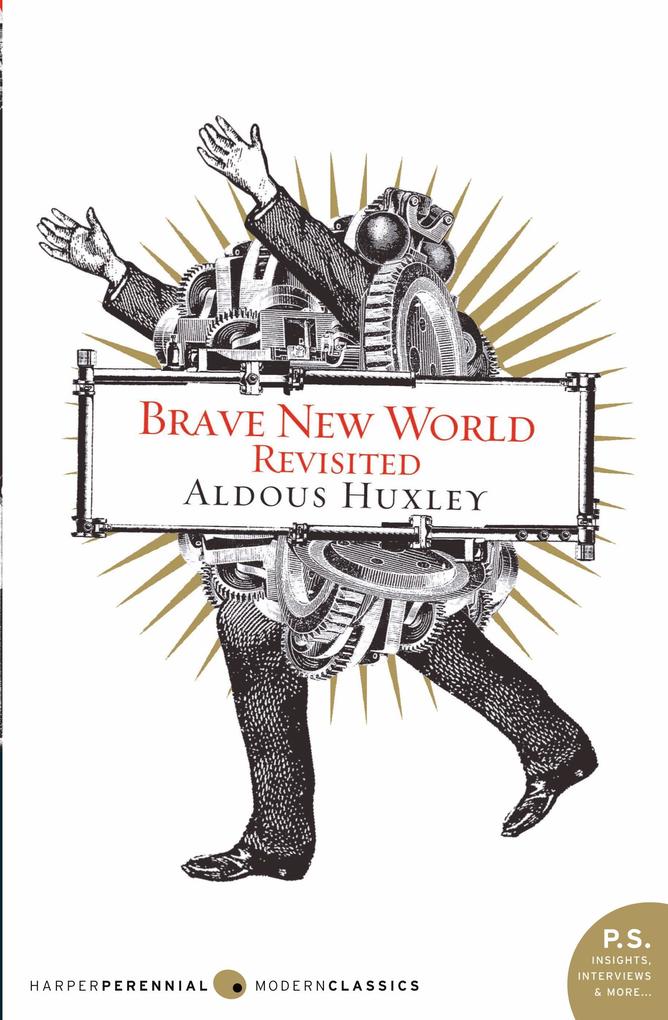
When Aldous Huxley wrote his famous novel Brave New World, he did so with the belief that the dystopian world he created was a true possibility given the direction of the social, political and economic world order. Written more than twenty-five years later, Brave New World Revisited is a re-evaluation of his predictions based on the changes he witnessed over that time.
In this twelve-part work of social philosophy, one of the most important and fascinating books of his career, Huxley uses his tremendous knowledge of human relations to compare the modern-day world with his prophetic fantasy. He scrutinizes threats to humanity, such as overpopulation, propaganda, and chemical persuasion, and explains why we have found it virtually impossible to avoid them. Brave New World Revisited is a trenchant plea that humankind should educate itself for freedom before it is too late.
In this landmark analysis, Huxley explores the chilling accuracy of his vision:
- Propaganda in a Democracy: An analysis of the methods used by commercial and political propagandists to manipulate the masses in a supposedly free society.
- Chemical Persuasion: A prescient warning about the use of drugs-both recreational and pharmaceutical-to create an artificial happiness that stifles dissent and critical thought.
- Overpopulation as a Threat: A clear-eyed look at how excessive human numbers, a problem Huxley once thought centuries away, now strains our resources and personal liberties.
- Education for Freedom: A powerful argument for an education rooted in critical thinking and the values of liberty as the only true antidote to creeping totalitarian control.