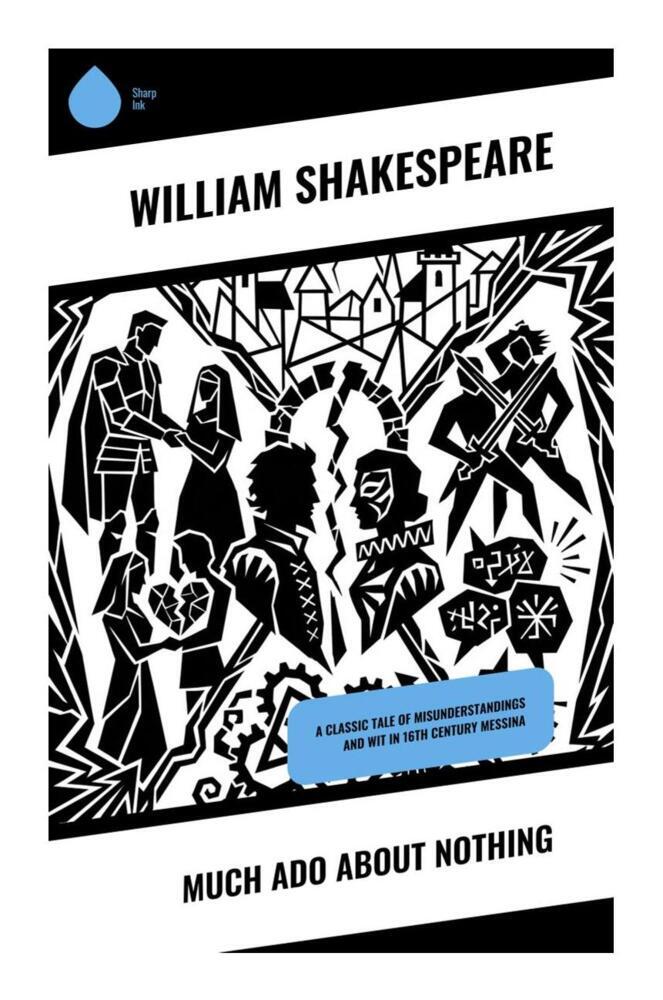
William Shakespeare's 'Much Ado About Nothing' is a sparkling comedic play that masterfully intertwines elements of romance, deception, and wit, all set in the sunny, vibrant land of Messina. At its core, the play centers around the two contrasting romantic relationships between Claudio and Hero, and Benedick and Beatrice. While Claudio and Hero's courtship evolves through a labyrinth of misunderstandings and societal pressures, Benedick and Beatrice engage in a spirited battle of wits that embodies the play's lively dialogue and engaging theatricality. Shakespeare's use of prose and verse suits his comic intentions, weaving intricate narratives that explore themes of honor, deceit, and the art of love, making the play a quintessential piece of the Renaissance comedic canon. A playwright of unmatched genius, William Shakespeare has often reflected the societal norms and intricacies of Elizabethan England in his works. Known for his keen insight into human nature and social mores, Shakespeare was influenced by the contrasting perceptions of gender roles and the importance of reputation during his time. This is evident in 'Much Ado About Nothing,' where misunderstandings and eavesdropping spur dramatic developments and witty repartee, hallmarks of his enduring appeal. For those seeking an exploration of love's complexities wrapped in humor and sharp dialogue, 'Much Ado About Nothing' stands as a testament to Shakespeare's literary prowess. Scholars and general readers alike will appreciate the play's deep thematic elements and its exploration of the human condition through comedy. It is a delightful journey into eloquence, humor, and timeless storytelling that continues to captivate modern audiences.