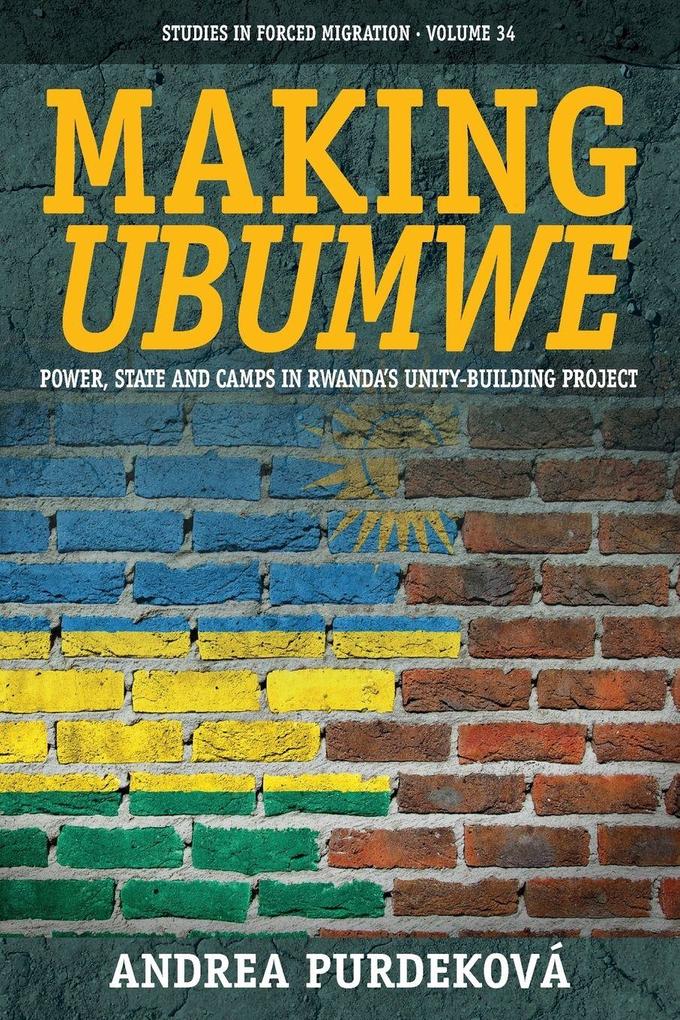
Since the end of the Rwandan genocide, the new political elite has been challenged with building a unified nation. Reaching beyond the better-studied topics of post-conflict justice and memory, the book investigates the project of civic education, the upsurge of state-led neo-traditional institutions and activities, and the use of camps and retreats shape the "ideal" Rwandan citizen. Rwanda's ingando camps offer unique insights into the uses of dislocation and liminality in an attempt to anchor identities and desired political roles, to practically orient and symbolically place individuals in the new Rwandan order, and, ultimately, to create additional platforms for the reproduction of political power itself.
Inhaltsverzeichnis
Acknowledgments
Abbreviations
Glossary
Map I: Rwanda
Map II: The Layout of Nkumba Ingando Camp
PART I: INTRODUCTION
Chapter 1. Kubaka Ubumwe: Building Unity in a Divided Society
Chapter 2. Settling the Unsettled: The Politics and Policing of Meaning in Rwanda
PART II: THE POLITICAL PROCESS
Chapter 3. The Wording of Power: Legitimisation as Narrative Currency and Political Intimation
Chapter 4. The Presencing Effect: Surveillance and State Reach in Rwanda
Chapter 5. Incorporation, Disconnect: The Embodiments of Power and the Unworking of Contestation
PART III: MAKING 'UBUMWE': THE IMAGERIES, PLANNING AND PERFORMANCES OF 'UNITY' IN RWANDA
Chapter 6. Unity's Multiplicities: Ambiguity at Work
Chapter 7. Performances and Platforms: Activities of Unity and Reconciliation in the Contexts of Power
Chapter 8. Ingando Camps: Nation Building as Consent Building
Chapter 9. Rights of Passage: Liminality and the Reproduction of Power
PART IV: CONCLUSIONS
Chapter 10. The Yeast of Change: Civic Education, Social Transformation and the New Development Corps
Chapter 11. What Kind of Unity? Prospects for Co-existence, Social Justice and Peace
Bibliography
Index