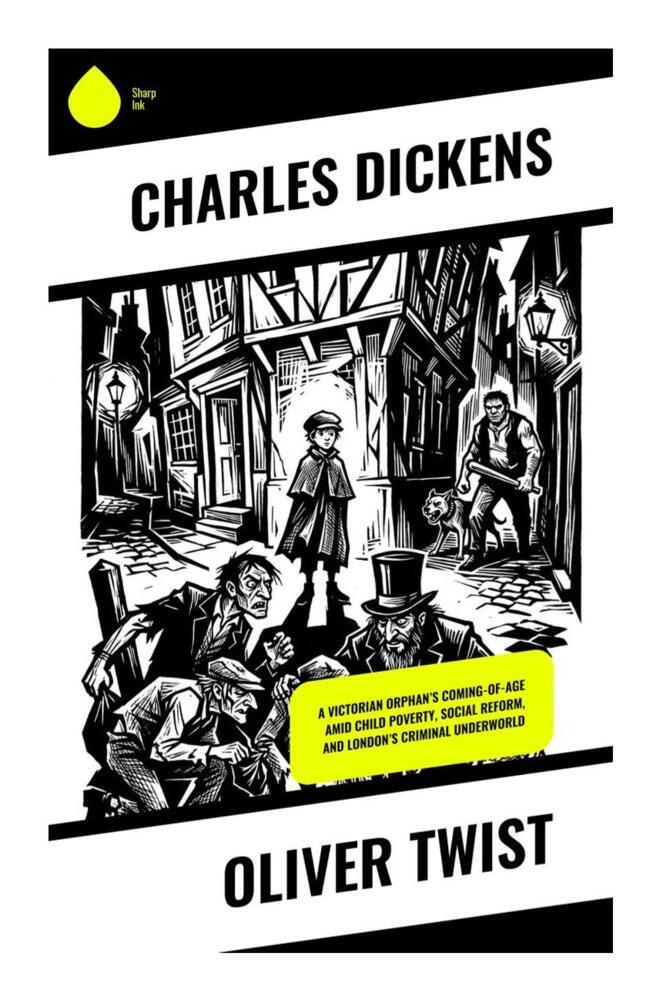
First serialized between 1837 and 1839, Charles Dickens's Oliver Twist is at once a gripping bildungsroman and a fierce social critique of Victorian England. Following the orphan Oliver from the parish workhouse into the criminal underworld of London, the novel exposes the brutality of the New Poor Law, the hypocrisies of charity, and the vulnerability of children in an unequal society. Dickens combines melodrama, satire, and vivid realism, creating unforgettable figures such as Fagin, Bill Sikes, and Nancy. Its episodic structure and sharply etched urban scenes place it firmly within the nineteenth-century social novel, while its moral urgency gives it enduring power. Dickens drew deeply on his own early experiences of insecurity and humiliation. As a child, he endured poverty, his father's imprisonment for debt, and labor in a blacking factory, experiences that shaped his lifelong concern for the neglected and exploited. By the time he wrote Oliver Twist, Dickens was already emerging as a major novelist and journalist, acutely attentive to the workings of London's institutions and streets. His intimate knowledge of hardship and social injustice informs every page of the novel. Oliver Twist remains essential reading for anyone interested in Victorian literature, the history of social reform, or the evolution of the English novel. It rewards readers with memorable characterization, moral seriousness, and extraordinary narrative energy.