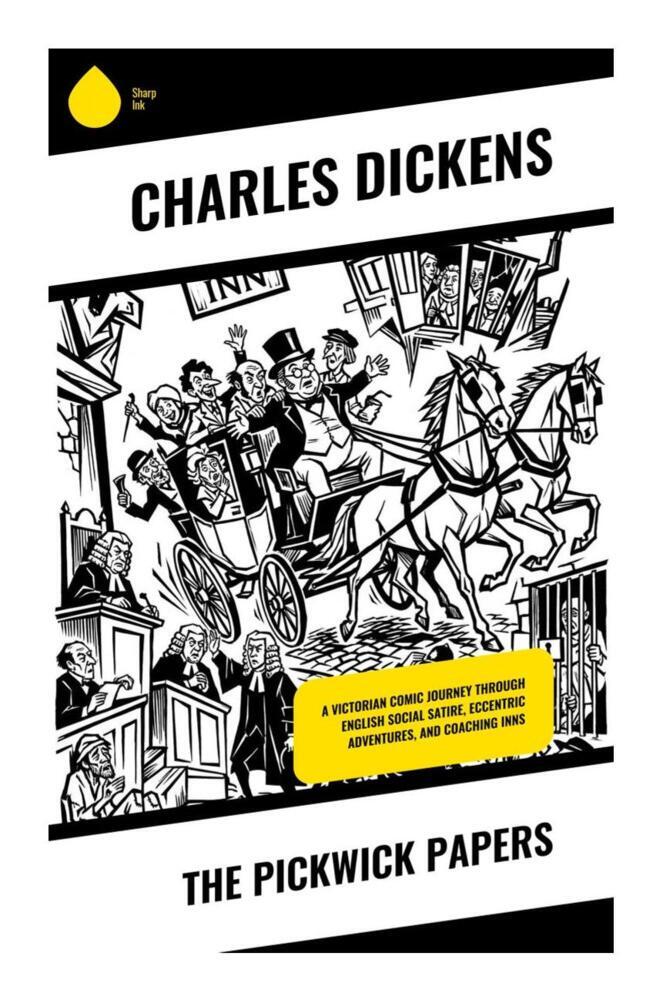
First published in serial form between 1836 and 1837, Charles Dickens's The Pickwick Papers follows the genial Samuel Pickwick and his fellow clubmen through a sequence of comic journeys, misadventures, and social encounters across England. Though loosely plotted, the novel is rich in observational detail, blending farce, satire, sentimentalism, and picaresque narrative in a manner that helped define early Victorian fiction. Beneath its exuberant humor and memorable caricatures lies a sharp portrait of English society, from inns and courtrooms to debtor's prison, where Dickens tests the moral character of both institutions and individuals. Dickens wrote the book at the beginning of his extraordinary career, and its success established him as one of the great novelists of the nineteenth century. Having known financial insecurity and the humiliations of urban life from a young age, he brought to his fiction an unusual sympathy for ordinary people and a keen eye for social absurdity. In The Pickwick Papers, his journalistic training and theatrical imagination are already evident, as is his enduring concern with class, law, and human vulnerability. This is an essential book for readers interested in the origins of Dickens's art and in the development of the English novel. It rewards those who delight in wit, humane comedy, and brilliant social description.