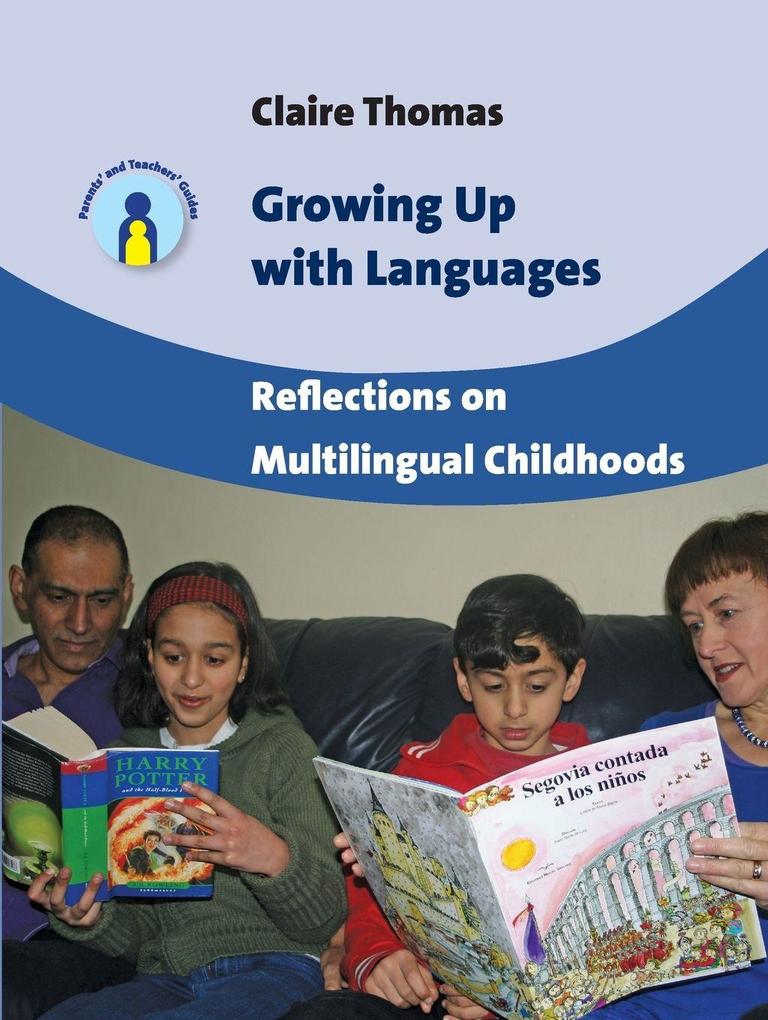
A unique new insight into multilingual families, this book views multilingual childhoods from the point of the child and is based on over 50 interviews with adults who grew up in multilingual settings. The book charts their recollections of their childhoods and includes many different types of families, discusses many of the common issues that arise in multilingual families, and draws examples from all over the world. The book fills a significant gap in the literature and resources available to multilingual parents. It was researched and written by a self-help group of multilingual parents and thus the book remains very practical and gives clear and realistic advice to multilingual parents facing choices or dilemmas. However, because of its unique viewpoint, this book also includes much new material that will be of interest to researchers and students of bilingualism.
Inhaltsverzeichnis
IntroductionSection A. Different types of family and issues that only affect some kinds of family 1. Issues for families speaking more than one language at home/Mixed Language Relationships; 2. Issues for families using one language at home, another in the community and at school; 3. Interviewees who are bilingual solely through attending school in another language; 4. Interviewees who learnt languages solely from the community; 5. Changes as a result of divorce or separation; 6. Changes as a result of the death of one parent 7. Changes as the result of advice given to parents; 8. Changes as the result of interviewees' choices or decisionsSection B. Isues at home that will affect most, if not all, families at some time 9. Consistency v. Flexibility in languages used at home; 10.Rewards, encouragement, sanctions and disapproval linked to language use; 11. Resistance - children who prefer not to speak a language; 12. Fitting in/Standing out; 13. Input from others, resources and holidaysSection C. Education 14. Starting school and changing schools; 15. Home language support/teaching in mainstream schools; 16. Additional support outside (or as an alternative to) mainstream schools 17.Help with homeworkSection D. Language policies and politics 18. Language status, links to politics and racismSection E. Interviewees as adults 19. Advantages and Disadvantages of having been raised bilingually; 20. One thing you would change about your bilingual childhood and advice to a family just starting out.; 21. Low input and language loss and retention; 22. Identities; 23. Studying and working abroad as young adults, choosing where to live more permanently and using bilingualism at work 24. Relationships; 25.Raising children monolingually or bilingually and reasons given; 26. Access to culture as adults; 27. Accents; 28.Learning additional languagesSection F.Overall Analysis and Recommendations 29. Factors linked to success or failure; 30. Recommendations to parents raising multilingual children