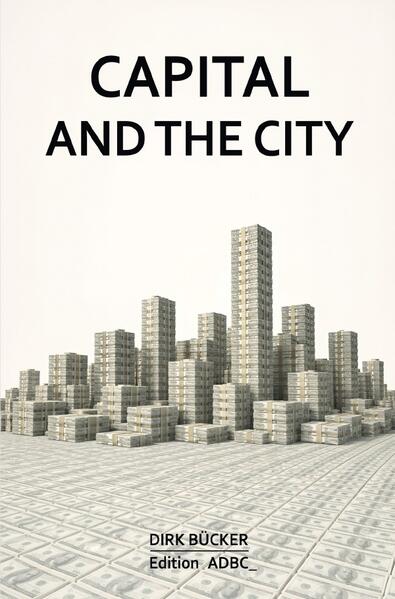
Why cities look the way they do: interest rates, credit, and land values shape architecture. From Gründerzeit urbanism to supertalls - and a counter-model: robust, repairable, and use-neutral.
This book shows why our cities look the way they do today - and why their transformation is often driven less by architectural ideas than by interest rates, lending rules, and land values. It takes the building seriously in its dual nature: as a useful object and as an exchange value. A house provides shelter, structures everyday life, and confers dignity - yet it is also appraised, mortgaged, and traded. As return metrics, financial logics, and pressures of extraction gain influence, the balance shifts: spatial quality gives way to economic criteria, with consequences for entire urban morphologies. From the Middle Ages and the Baroque period through the great urban upheavals of the nineteenth century and into modernism, the book shows how plots, blocks, and typologies emerge from rights, levies, infrastructure, and capital. It presents modernism both as a reform project and as something that later tipped into standardisation, functional separation, and economic homogenisation. Using the metropolis as its example, the book reveals how financial history becomes urban history, and how architecture can become an expression of financial logic. Height, slenderness, views, and location appear not only as architectural qualities, but also as economic values. Yet this logic has its limits: defects, insurability, and operating costs. In the end, the book proposes a counter-model: the Gründerzeit not as a style to be copied, but as a principle - robust, repairable, open in use, and sustained by a form of capital capable of thinking in the long term. German version: Das Kapital und die Stadt