Bücher versandkostenfrei*100 Tage RückgaberechtAbholung in über 100 Filialen





Fürs Osterfest reduziert: tolino vision color & shine color zum Aktionspreis
Jetzt sparen
mehr erfahren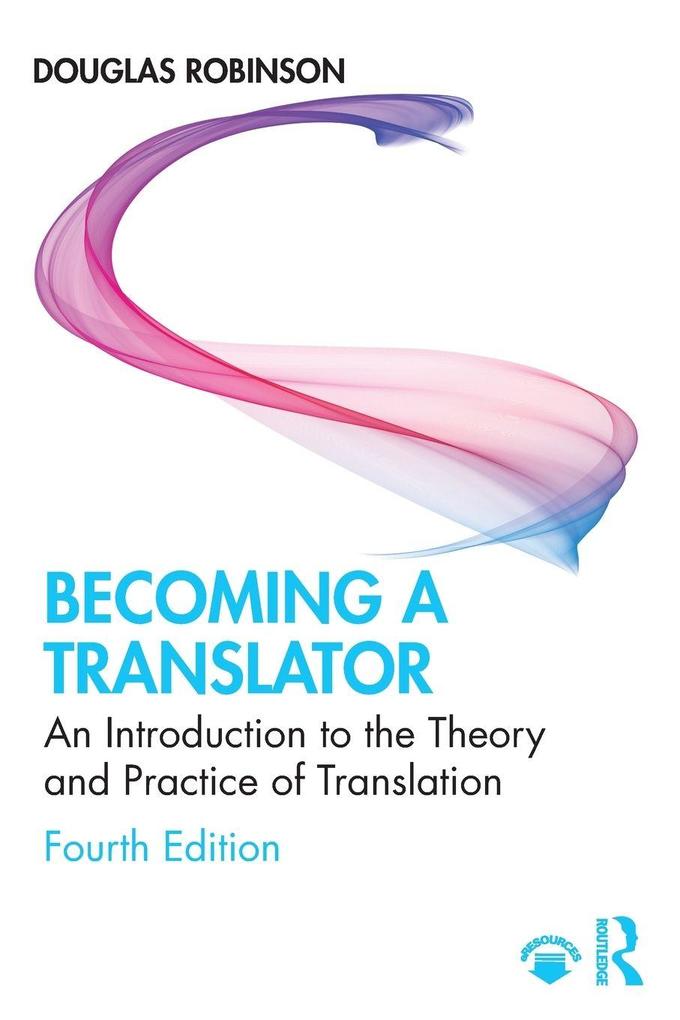
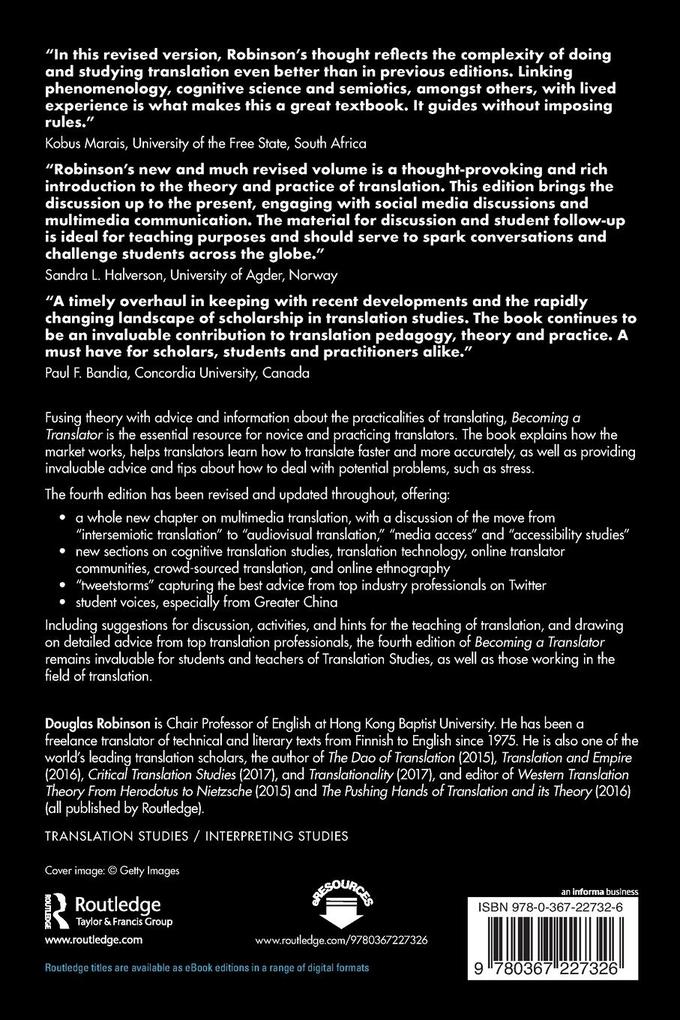
Fusing theory with advice and information about the practicalities of translating, Becoming a Translator is the essential resource for novice and practicing translators. The book explains how the market works, helps translators learn how to translate faster and more accurately, as well as providing invaluable advice and tips about how to deal with potential problems, such as stress.
The fourth edition has been revised and updated throughout, offering:
Including suggestions for discussion, activities, and hints for the teaching of translation, and drawing on detailed advice from top translation professionals, the fourth edition of Becoming a Translator remains invaluable for students and teachers of Translation Studies, as well as those working in the field of translation.
Inhaltsverzeichnis
List of figures
List of tables
Acknowledgments
Preface to the fourth edition
Introduction
1 External knowledge: the user's view
2 Internal knowledge: the translator's view
3 The process of translation
4 Drawing on experience: how being a translator is more than just being good at languages
5 Starting with people: social interaction as the first key focus of translators' experience of the world
6 Working with people: the workplace as the interactive setting for specialized terminologies
7 Translation as an operation performed in and on languages
8 Translation as an operation performed in and on multimedia
9 Working and understanding through social networks
10 The impact on translation of culture(s)
11 When habit fails
References
Index
Begonia Rodriquez, Portsmouth, UK (uses as core and optional at u/g and p/g level with 100+ sts on each)
Packed full of information, this edition provides a comprehensive account of many aspects that will be useful to some translators or translator trainers. In particular, the suggested exercises could be adapted and adopted in the translation classroom by new trainers who have not got experience of teaching translation.
Asks to bring the content up to date with current professional and training translation practices.
Alejandra Carballo, Depart. of English and World Languages, Arkansas Tech University, USA
(core text for medical interpretation module, mixed level)
Positive, just wants more American examples.
Kobus Marais, University of the Free State, Bloemfontein, SA (core book for 3rd yr u/gs)
Positive, several suggestions.
Tamara Mikolic Juznic, University of Ljubljana, Slovenia (rec reading for 1st yr ug and 1st yr MA):
The text is very well written, the style is appropriate and accessible for students, the structure is very clear and repetitive, as well as circular, so that the inexperienced reader can find comfort in the form when dealing with contents that might go against their (naïve) expectations.
The topics are carefully selected and I believe that the selection of theories and authors presented is very appropriate for an introductory course. It gives the young reader a chance to familiarize themselves with the key figures in Translation Studies and it gives access to the most important works in the field, categorized in a very clear way. The discussion and exercise sections can be (mostly) easily adapted to local situations and used either in class or as home assignments, in groups or individually.
Clara Yu, Monash University, Oz (now a contributor) (uses with 1st and 2nd yr p/gs)
Readers mainly asked for the book to reflect the current climate for translators, which has of course changed so much over recent years, for more on technological issues mostly. Also requests for a multimodal approach throughout and examples from the global south. Doug is doing all this and more.
Es wurden noch keine Bewertungen abgegeben. Schreiben Sie die erste Bewertung zu "Becoming a Translator" und helfen Sie damit anderen bei der Kaufentscheidung.