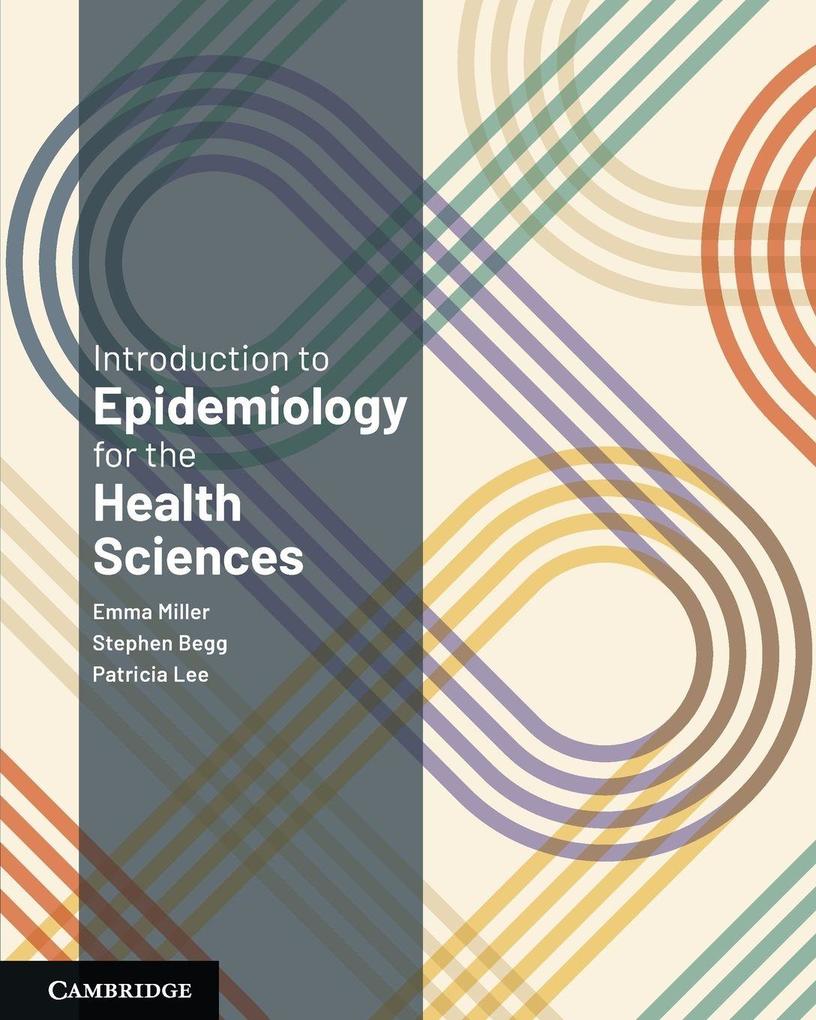
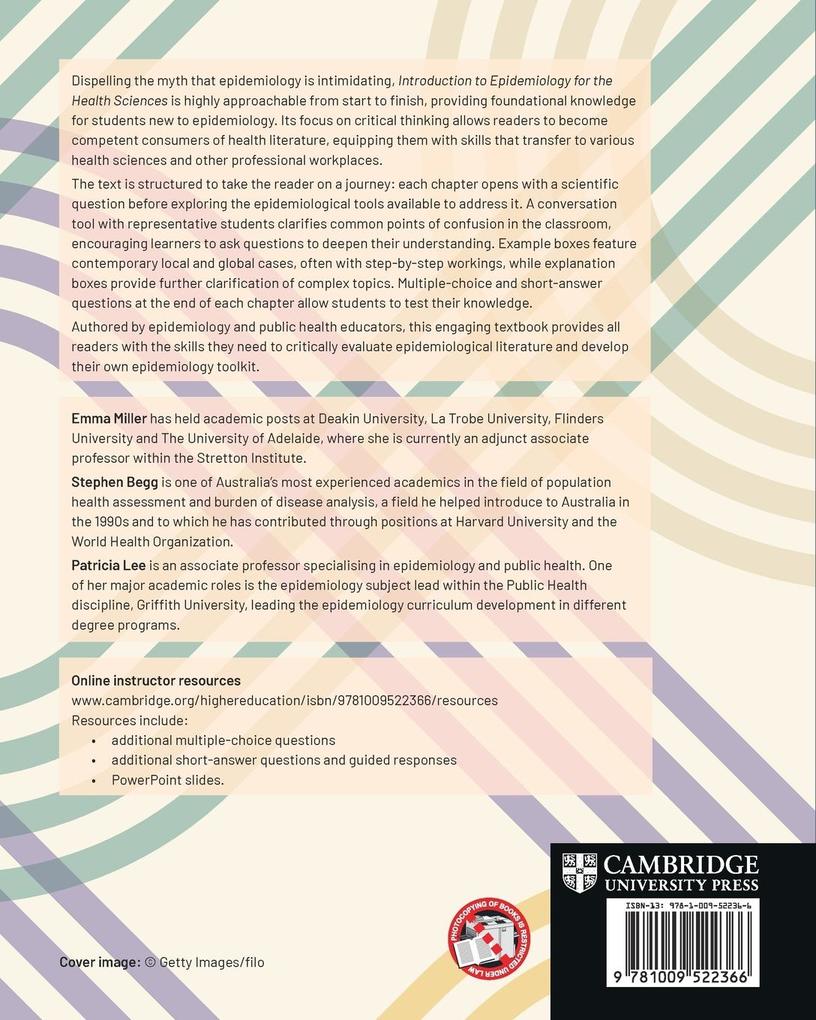
Introduction to Epidemiology for the Health Sciences is highly approachable from start to finish, providing foundational knowledge for students new to epidemiology. Its focus on critical thinking allows readers to become competent consumers of health literature, equipping them with skills that transfer to various health sciences workplaces.
Inhaltsverzeichnis
Part I. Thinking Like an Epidemiologist: 1. Thinking critically, problem solving and setting priorities in epidemiology; Part II. Analysing: How Big is the Health Issue? : 2. Talking like an epidemiologist; 3. Making comparisons; Part III. Reasoning: How to Investigate Causes of Death and Ill-health: 4. Opening the epidemiological toolbox; 5. Describing the problem; Part IV. Problem-solving: Why Do Some People Get a Disease, Become Ill, or Get Better? : 6. Measuring exposure and the outcome together; 7. Starting with the outcome; 8. Starting with exposure; 9. Controlling exposure; Part V. Evaluating: Is There a Relationship between Exposure and the Outcome? : 10. Detecting a relationship; Part VI. Decision-making: Could the Relationship be True? : 11. Considering the effect of bias and confounding; 12. Bringing it together.