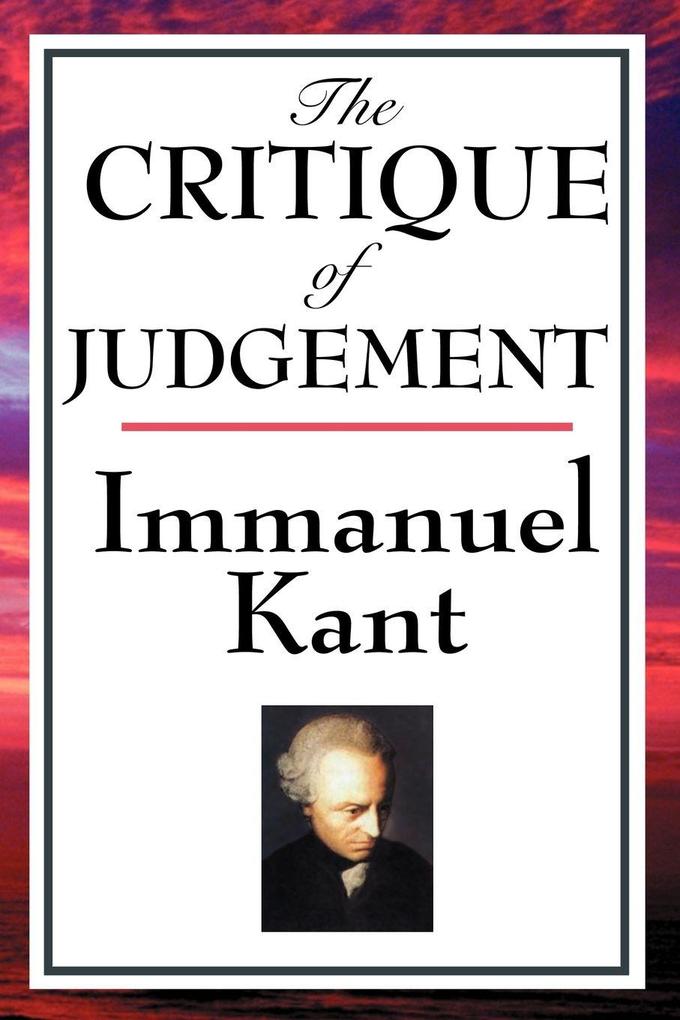
A central work of eighteenth-century philosophy examining the nature of aesthetic experience and purposiveness in the natural world. In The Critique of Judgment, Immanuel Kant completes his critical system by turning from questions of knowledge and morality to those of beauty, taste, and teleology, seeking to unify the domains of reason through a deeper analysis of judgment itself.
Divided between the Critique of Aesthetic Judgment and the Critique of Teleological Judgment, the work explores how individuals perceive beauty and sublimity, and how they interpret apparent purpose within nature. Kant argues that judgments of taste, while subjective, possess a universal communicability grounded in shared human faculties, while teleological reasoning allows for the meaningful study of living systems without reducing them entirely to mechanistic explanation.
First published in 1790, this text stands as a cornerstone of modern aesthetics and a key contribution to philosophical discussions of art, nature, and human cognition. Its influence extends across philosophy, literary theory, and the history of ideas, making it an essential work for readers seeking to understand the development of modern thought.