Winner of the Nobel Prize in Literature
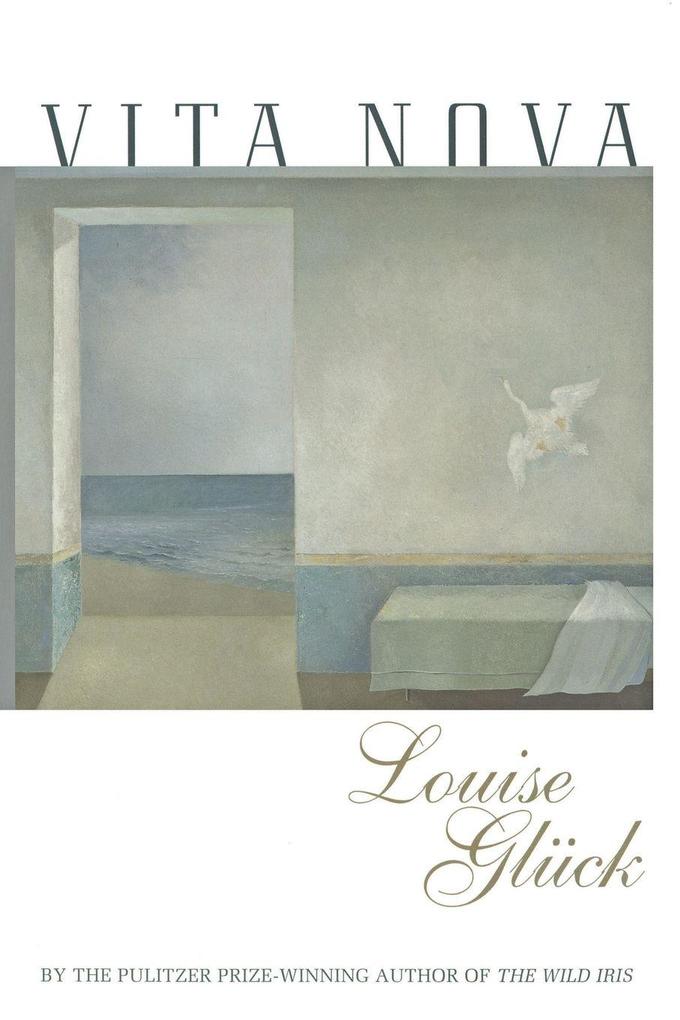
In Vita Nova, Pulitzer-Prize winning poet Louise Glück manages the apparently impossible: a terrifying act of perspective that brings into resolution the smallest human hope and the vast forces that shape and thwart it
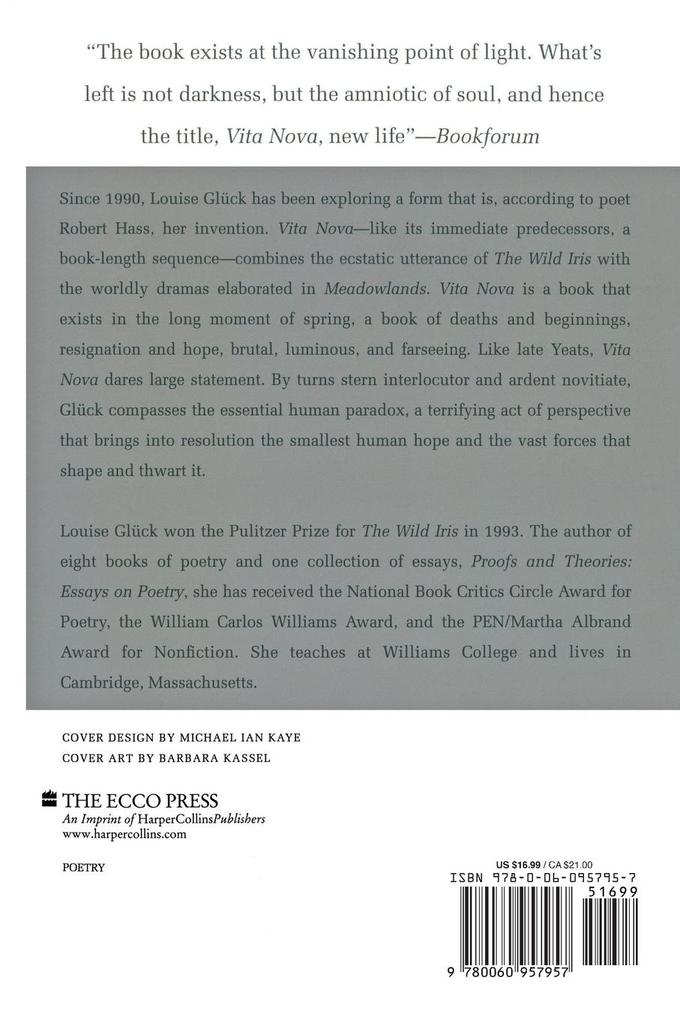
Since Ararat in 1990, Louise Glück has been exploring a form that is, according to the poet, Robert Hass, her invention. Vita Nova--like its immediate predecessors, a booklength sequence--combines the ecstatic utterance of The Wild Iris with the worldly dramas elaborated in Meadowlands. Vita Nova is a book that exists in the long moment of spring: a book of deaths and beginnings, resignation and hope; brutal, luminous, and far-seeing.
Like late Yeats, Vita Nova dares large statement. By turns stern interlocutor and ardent novitiate, Glück compasses the essential human paradox. In Vita Nova, Louise Glück manages the apparently impossible: a terrifying act of perspective that brings into resolution the smallest human hope and the vast forces that thwart and shape it.
Here, classical myth collides with modern feeling.
- A Modern Mythology: The timeless grief of Orpheus and the defiance of Dido are re-examined through a startlingly contemporary lens.
- Poems of Love and Loss: A book-length sequence that follows the arc of a relationship’s end and the difficult, luminous spring that follows.
- The Paradox of Hope: Glück’s unmistakable voice confronts the essential human paradox—finding a “new life” in the very moments of death and resignation.
- Austere Beauty: Each poem is a masterclass in precision and form, where ecstatic utterance meets worldly drama in a style that is Glück’s alone.