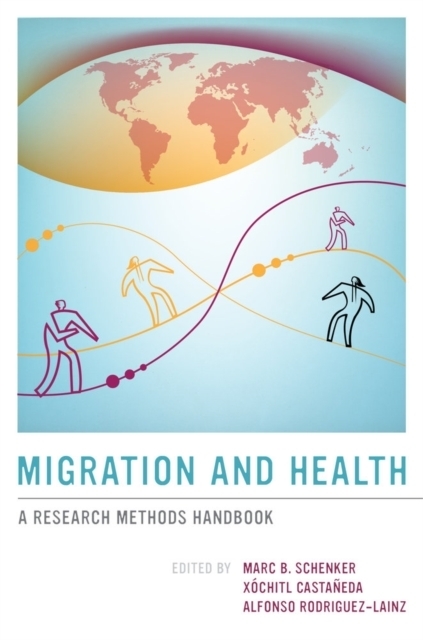
The study of migrant populations poses unique challenges owing to the mobility of these groups, which may be further complicated by cultural, educational, and linguistic diversity as well as the legal status of their members. These barriers limit the usefulness of both traditional survey sampling methods and routine public health surveillance systems. Since nearly 1 in 7 people in the world is a migrant, appropriate methodological approaches must be designed and implemented to capture health data from populations. This effort is particularly important because migrant populations, in comparison to other populations, typically suffer disparities related to limited access to health care, greater exposure to infectious diseases, more occupational injuries, and fewer positive outcomes for mental health and other health conditions. <p/> This path-breaking handbook is the first to engage with the many unique issues that arise in the study of migrant communities. It offers a comprehensive description of quantitative and qualitative methodologies useful in work with migrant populations. By providing information and practical tools, the editors fill existing gaps in research methods and enhance opportunities to address the health and social disparities migrant populations face in the United States and around the world.
Inhaltsverzeichnis
Foreword Michael V. Drake, MD SECTION ONE. Introductory Materials Section Editor: Marc B. Schenker
1. Introduction Marc B. Schenker (UC Davis, US)
2. Studying Migrant Populations: General Considerations and Approaches Alfonso Rodriguez-Lainz (CDC, US) Xochitl Castaneda (UC Berkeley, US)
3. Life Course Epidemiology: A Conceptual Model for the Study of Migration and Health Jacob Spallek (Bielefeld University, Germany) Hajo Zeeb (University of Bremen, Germany) Oliver Razum (Bielefeld University, Germany) SECTION TWO. Quantitative Methodological Approaches Section Editor: Alfonso Rodriguez-Lainz
4. Use of Existing Health Information Systems in Europe to Study Migrant Health Katia Levecque (University of Ghent, Belgium) Elena Ronda-Perez (University of Alicante, Spain) Emily Felt (Pompeu Fabra University, Spain) Fernando G. Benavides (Pompeu Fabra University, Spain)
5. Use of National Data Systems to Study Immigrant Health in the United States Gopal K. Singh (DHHS, US)
6. The Community-Based Migrant Household Probability Sample Survey Enrico A. Marcelli (San Diego State University, US)
7. Respondent-Driven Sampling for Migrant Populations Lisa Johnston (UC San Francisco, US) Mohsen Malekinejad (UC San Francisco, US)
8. Time-Space Sampling of Migrant Populations Salaam Semaan (CDC, US) Elizabeth DiNenno (CDC, US)
9. Prior Enumeration: A Method for Enhanced Sampling with Migrant Surveys Richard Mines (Agricultural Economics Consultant, US) Coburn C. Ward (University of the Pacific, US) Marc B. Schenker (UC Davis, US)
10. Telephone-Based Surveys David Grant (UCLA, US) Royce J. Park (UCLA, US) Lin Yu-chieh (University of Michigan, US)
11. Case-Control Studies Clelia Pezzi (CDC, US) Philip H. Kass (UC Davis, US)
12. Longitudinal Studies Guillermina Jasso (New York University, US) SECTION THREE. Qualitative Methodological Approaches Section Editor: Xochitl Castaneda
13. Ethnographic Research in Migration and Health Seth M. Holmes (UC Berkeley, US) Heide Castaneda (University of South Florida, US)
14. Participant Observation and Key Informant Interviews Rosa Maria Aguilera (Instituto Nacional de Psiquiatria Ramon de la Fuente Muniz, Mexico) Ana Amuchastegui (Universidad Autonoma Metropolitana Xochimilco, Mexico)
15. Focus Groups/Group Qualitative Interviews Patricia Zavella (UC Santa Cruz, US)
16. Full Circle: The Method of Collaborative Anthropology for Regional and Transnational Research Bonnie Bade (California State University, San Marcos, US) Konane Martinez (California State University, San Marcos, US)
17. Photovoice as Methodology Regina Day Langhout (UC Santa Cruz, US) SECTION FOUR. Crosscutting Issues Section Editors: Marc B. Schenker, Alfonso Rodriguez-Lainz, and Xochitl Castaneda
18. Ethical Issues across the Spectrum of Migration and Health Research Kevin Pottie (University of Ottawa, Canada) Patricia Gabriel (University of British Columbia, Canada)
19. Community-Based Participatory Research: A Promising Approach for Studying and Addressing Immigrant Health Meredith Minkler (UC Berkeley, US) Charlotte Chang (UC Berkeley, US)
20. Occupational Health Research with Immigrant Workers Michael A. Flynn (CDC, US) Donald E. Eggerth (CDC, US)
21. Methodological Recommendations for Broadening the Investigation of Refugees and Other Forced Migrants Andrew Rasmussen (Fordham University, US)
22. Working Internationally Carol Camlin (UC San Francisco, US) David Kyle (UC Davis, US)
23. Binational Collaborative Research Sylvia Guendelman (UC Berkeley, US)
24. Ensuring Access to Research for Nondominant Language Speakers Francesca Gany (Memorial Sloan-Kettering Cancer Center, US) Lisa Diamond (Memorial Sloan-Kettering Cancer Center, US) Rachel Meislin (New York University, US) Javier Gonzalez (Memorial Sloan-Kettering Cancer Center, US)
25. Extended Case Study: A Mixed-Methods Approach to Understanding Internal Migrant Access to Health Care and the Health System's Response in India Bontha V. Babu (Indian Council of Medical Research, India) Anjali B. Borhade (Indian Institute of Public Health, India) Yadlapalli S. Kusuma (All India Institute of Medical Sciences, India) Contributors Index