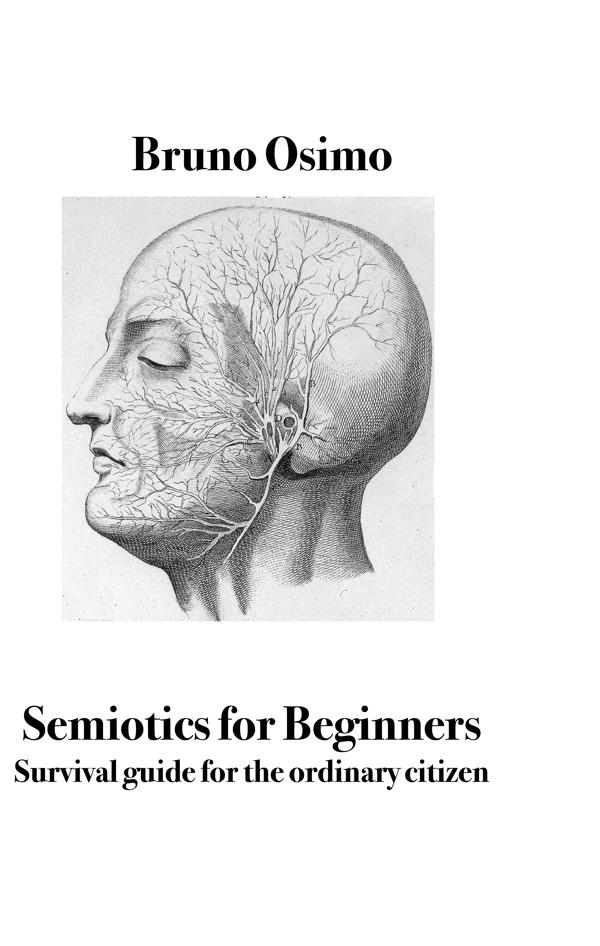
What if you could understand what people really mean-not just what they say?
Every day, you're surrounded by signs: advertisements, gestures, clothes, emojis, silences, even the way someone looks at you. Each of these carries a sense that goes far beyond the dictionary definition of words.
Semiotics for Beginners is your survival guide to decoding the hidden messages of everyday life.
Written for the average citizen-not professors or academics-this book gives you the tools to:
- Understand how meaning is created and manipulated
- Recognize when you're being persuaded, deceived, or influenced
- Decode advertising, politics, and social media
- See the world through the eyes of a semiotician
No jargon. No obscure theories. Just practical knowledge you can use every day.
"Semiotics serves to understand the sense of life, the sense of things."
Perfect for: curious minds, critical thinkers, and anyone tired of being manipulated.
You speak English fluently-but do you understand the world around you?
Semiotics is the discipline of sense. While linguistics tells you what words mean, semiotics tells you what they mean in context-in advertising, in relationships, in politics, in everyday life.
This book is a practical, no-nonsense introduction to semiotics for the average citizen. No academic jargon, no dense theory-just clear explanations of:
- Why translation is not just about languages, but about cultures and worldviews
- How your brain creates meaning from signs, symbols, and signals
- Why what is NOT said is often more important than what is
- How advertising and media manipulate your choices
- Why "common sense" is culture-specific-and what that means for you
- How cognitive biases distort your perception of reality
- What stories (narratives) really do to your mind
With 66 concise chapters, this book covers everything from icons and indices to paradigms, frames, tropes, and political correctness-all explained in simple, everyday language.
What readers will discover:
- Why semiotics is not communication, but something deeper
- How abduction (conjecture) is more creative-and more useful-than deduction
- Why every person constitutes a culture
- How autocommunication (talking to yourself) restructures your identity
- What cognitive biases do to your judgment-and how to spot them
Semiotics for Beginners is for anyone who has ever felt that there's more to life than what meets the eye-and wants to understand it.
Are you being manipulated? Probably. Here's how to fight back.
Every time you watch an ad, scroll through social media, or listen to a politician, you're being targeted by hidden messages. They're designed to influence you-and they work. Unless you know how to decode them.
Semiotics for Beginners gives you the tools to see through the noise.
This is not an academic textbook. It's a survival guide for the average citizen navigating a world of increasingly aggressive advertising, spin, and misinformation.
Inside, you'll learn:
- What semiotics actually is-and why no one ever taught it to you in school
- How to distinguish between what's true, what's probable, and what's just manipulation
- Why your brain creates patterns that don't exist-and how to catch yourself
- How to read non-verbal texts like clothing, gestures, and even architecture
- Why political correctness and denialism are two sides of the same coin
- How stories (narratives) shape your identity and your choices
By the time you finish this book, you will never see the world the same way again.
"In Italy, and across Western Europe, hardly anyone knows what semiotics actually is."
So begins Bruno Osimo's practical guide to one of the most useful-and most misunderstood-disciplines in the modern world.
Semiotics is not a dusty academic subject for professors in ivory towers. It's the study of ho