Bücher versandkostenfrei*100 Tage Rückgaberecht***Abholung in über 100 Filialen
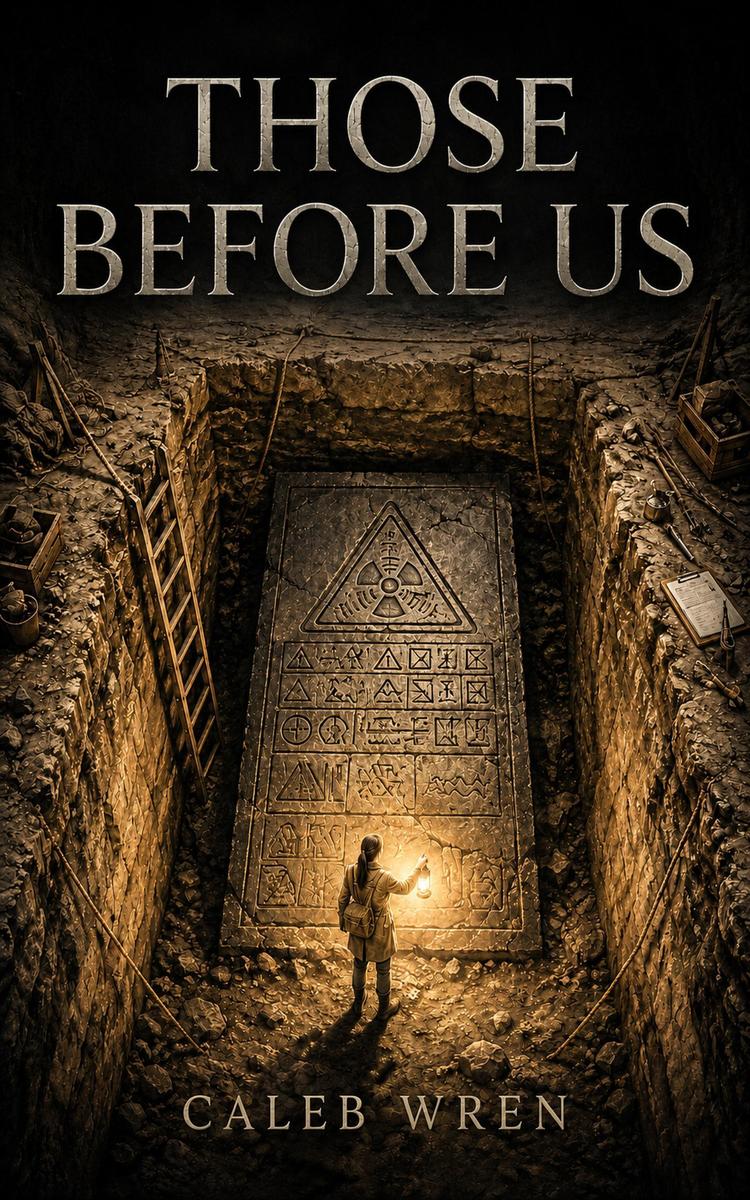
Nineteen thousand years separate us from those who stood on this hill.
The number means nothing until you hold it in your mouth. No language survives that long. No memory. Between them and us a whole world has worn away twice ice, three times sea, countless generations that left not even bones.
Iret has been excavating the city for forty years. She knows its streets better than her own where they gathered, where they traded, where they slept and where they buried their dead. She has written nine volumes about them, and from those volumes the world learned what it knows today: that they were a simple people who lived briefly, believed many things and understood few. That they worshipped abundance. That they painted their gods on walls in colours we cannot mix.
She retracts not one word of it. But that is not what her final report is about.
Two kilometres beyond the last street stands the Great Building, which resembles nothing else in the city. In front of it lies a flat expanse that has turned to something between stone and soil in nineteen thousand years and still refuses to let grass through and across it, cleared the previous season, run thousands of parallel lines, regular as a sheet of music.
They found it many years ago. It is not a city. And Iret is writing this on the last evening before the opening.
A novel about the archaeology of us: what a civilisation leaves behind, what the record cannot hold, and how confidently the future will explain a people it can no longer hear.
Es wurden noch keine Bewertungen abgegeben. Schreiben Sie die erste Bewertung zu "Those Before Us" und helfen Sie damit anderen bei der Kaufentscheidung.