Charles Dickens' masterpiece of historical fiction about injustice, sacrifice, and redemption, set against the French Revolution
"It was the best of times, it was the worst of times. . . ."
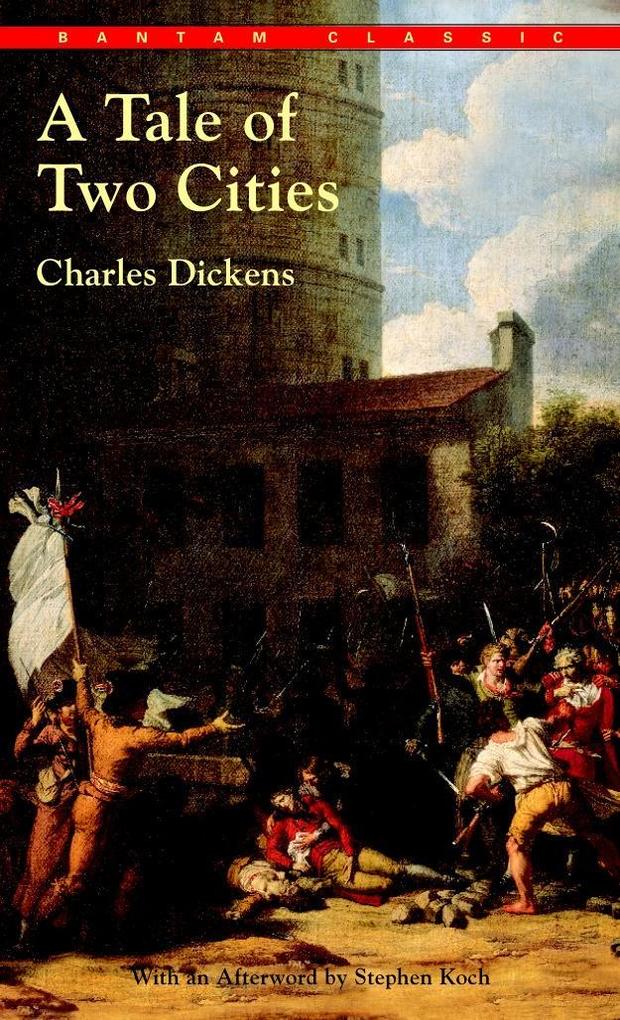
So begins Charles Dickens' A Tale of Two Cities, a masterful pageant of idealism, love, and adventure during the French Revolution.
After nearly two decades, Lucie Manette's father is released from his unjust imprisonment in the Bastille. The two relocate to London and meet Charles Darnay, a French aristocrat, and Sidney Carton, an English lawyer. Both men are smitten with the gorgeous Lucie, and she eventually weds Charles. But once the French Revolution breaks out, Charles faces execution-and Sidney faces a life-changing decision.
With his sublime parting words, "It is a far, far better thing that I do, than I have ever done . . . ," Sidney Carton joins that exalted group of Dickensian characters who have earned a permanent place in the popular literary imagination. His dramatic story, set against the fury of the French Revolution and pervaded by the ominous rumble of the death carts trundling toward the guillotine, is the heart-stirring tale of a heroic soul in an age gone mad.