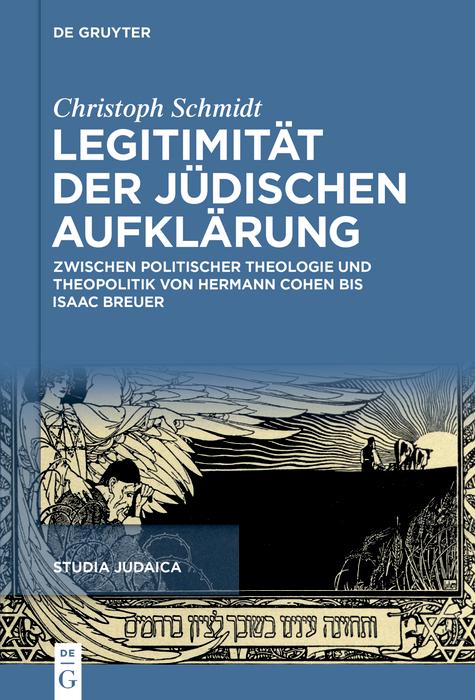
The renaissance of Jewish theology that began as a result of the crisis of liberal German Jewish culture is also understood as a political reorientation. Hermann Cohen's "Religon der Vernunft" (Religion of Reason) of 1918 still attempted to sketch a synthesis of Kantian Enlightenment and prophetic theology, envisioning a salvation of the Jewish nation within the framework of the Enlightenment's messianic utopia. In contrast, the various versions of political orthodoxy (Isaac Breuer, Elias Bickermann) and national Zionist political theologies (Jacob Klatzkin, Gershom Scholem) - especially in light of the looming Nazi threat - call for a departure from this secular-liberal culture. Against the emerging confrontation between Orthodoxy and secular Zionism, the later Gershom Scholem and especially Martin Buber try to design a new version of Jewish enlightenment as a dialogue between philosophy and theology. This legitimation of Jewish modernity actually corresponds to a "post-secular" legitimation of Hermann Cohen's ethical theology on a Zionite basis.