Bücher versandkostenfrei*100 Tage RückgaberechtAbholung in über 100 Filialen
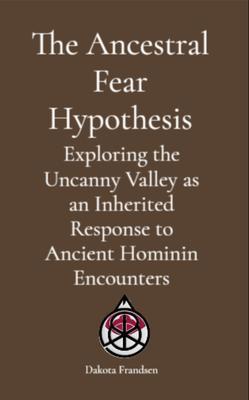
Why do we fear what is almost human?
The Uncanny Valley is one of psychology's most compelling mysteries-the visceral revulsion we feel when confronted by an entity that is almost human, but subtly, profoundly wrong. For decades, theories have focused on faulty wiring, pathogen avoidance, or mortality fears.
But what if the answer lies not in our present, but in a terror from the deep past?
This groundbreaking report proposes the Ancestral Fear Hypothesis: that the Uncanny Valley is an ancient, inherited psychological defense mechanism forged during tens of thousands of years of tense coexistence between Homo sapiens and our nearest relatives, the Neanderthals.
Drawing on cutting-edge research in evolutionary psychology, paleoanthropology, and the emerging science of transgenerational trauma, this analysis reveals a compelling and provocative argument:
The Ancestral Fear Hypothesis connects our most modern psychological quirk to the most profound drama of human evolution. It is a terrifying journey that suggests the unease you feel when looking at a lifelike mannequin is not an illusion-it is a whispered warning from your ancestors, urging you to fear those who look almost-but not quite-like us.
Es wurden noch keine Bewertungen abgegeben. Schreiben Sie die erste Bewertung zu "The Ancestral Fear Hypothesis" und helfen Sie damit anderen bei der Kaufentscheidung.