Bücher versandkostenfrei*100 Tage RückgaberechtAbholung in über 100 Filialen
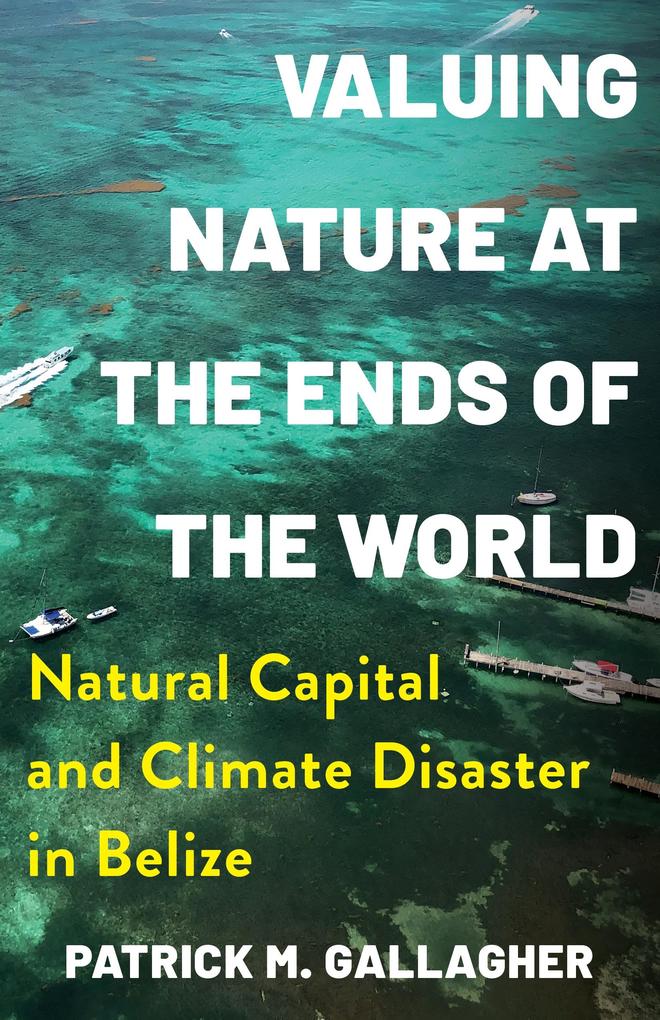
Belize is often described as a "pristine" ecotourism destination with a landscape that is "naturally" valuable. Yet for much of the twentieth century, British Honduras-as the country was known under colonial rule-was seen as lacking value, an unprofitable backwater. Valuing Nature at the Ends of the World explores how Belize's precarious coastal environment has become a site for a new kind of capitalist value production, in which landscapes and ecosystems derive worth from their vulnerability or looming destruction in the era of climate change.
Drawing on a decade of ethnographic research, Patrick M. Gallagher offers a critical account of market-oriented conservation in the Caribbean that ranges across everyday coastal life, emergent ecological science, and climate policy spaces. He shows how the long material and social histories of racialized colonialism shape the making of technocratic tools for valuing nature. Gallagher traces how new forms of capitalist value emerge from the interaction among colonial pasts, contemporary conservation practices, and vivid scenarios of imminent climate change-driven disaster and loss. He also examines how people and policymakers in Belize imagine and create new ways of life in a changing environment. Ethnographically grounded and rich in theoretical insight, this book illuminates how the Anthropocene environment, newly visible and valuable at the moment of its presumed disappearance, came into being in Belize and around the world.
Es wurden noch keine Bewertungen abgegeben. Schreiben Sie die erste Bewertung zu "Valuing Nature at the Ends of the World" und helfen Sie damit anderen bei der Kaufentscheidung.