Bücher versandkostenfrei*100 Tage RückgaberechtAbholung in über 100 Filialen












Bald ist Valentinstag: 15% Rabatt11 auf viele Sortimente mit dem Code HERZ15
Jetzt einlösen
mehr erfahren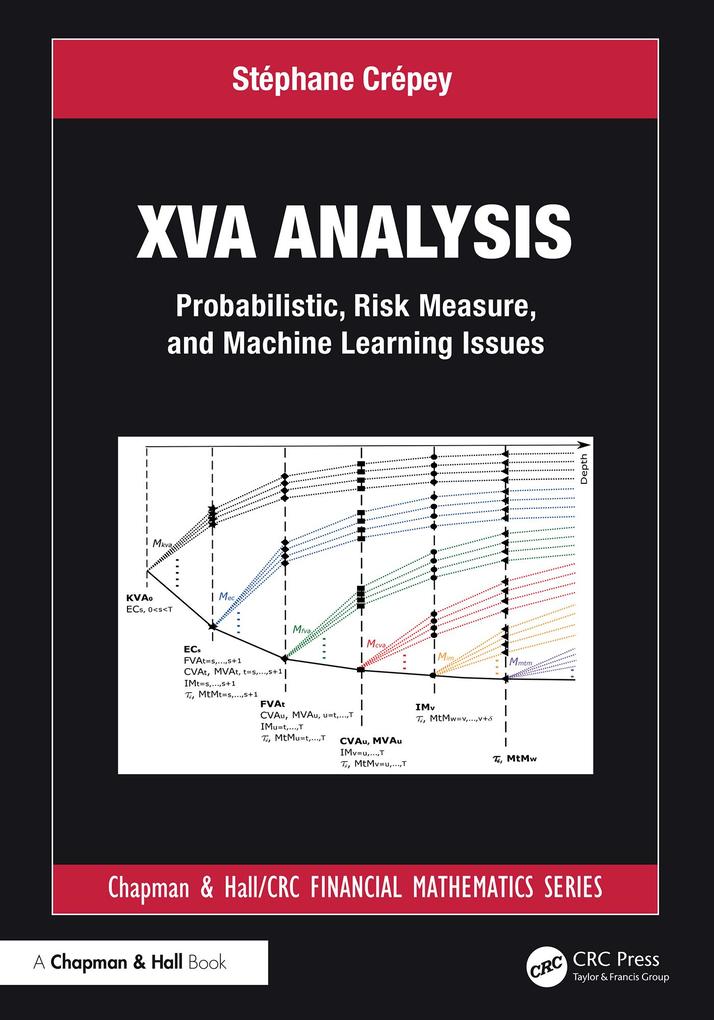
XVA Analysis: Probabilistic, Risk Measure, and Machine Learning Issues offers readers an up-to-date and comprehensive exploration of the X-Value Adjustment (XVA) universe and of the embedded risk measure issues inherent within it. The book tackles this subject through the triple lens of finance (wealth transfers), stochastic analysis (enlargement of filtration and BSDEs), and numerical computations.
The traditional credit valuation adjustment (CVA) desk compensates the trading desks for the cash flows that they lose in case of defaults of their counterparties. The Treasury of the bank funds the activity of the trading desks and of the CVA desk at the risk-free rate. The CVA desk and the Treasury charge their costs to the clients of the bank at a valuation level ensuring to the shareholders of the bank corresponding PnL processes that are martingales relative to a fininsurance probability measure calibrated to the market and consistent with the physical probability measure given the market. The management of the bank charges to the clients of the bank a capital valuation adjustment (KVA) risk premium, turning the overall dividend process of the bank shareholders into a submartingale in line with a target hurdle rate on their capital at risk within the bank.
This is the essence of the cost-of-capital XVA approach, which can also be used in reverse engineering mode, for determining the price range of a new deal that improves the implied hurdle rate of the bank shareholders. The advent of XVAs reflects a shift of paradigm regarding the pricing and risk management of financial derivatives, from hedging to balance sheet optimization.
Features
Es wurden noch keine Bewertungen abgegeben. Schreiben Sie die erste Bewertung zu "XVA Analysis" und helfen Sie damit anderen bei der Kaufentscheidung.
