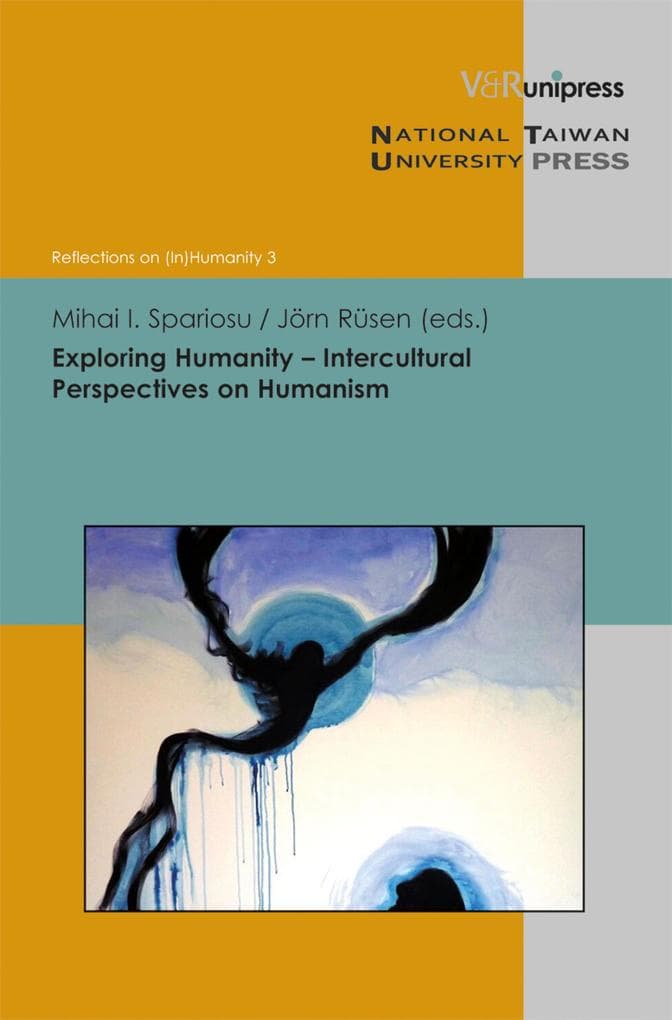
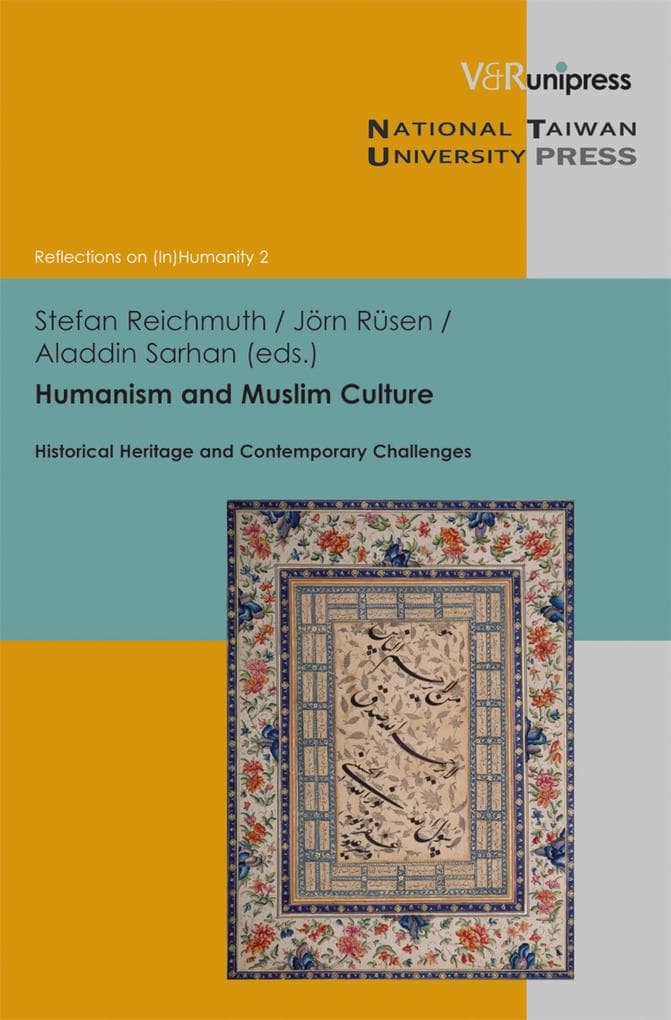
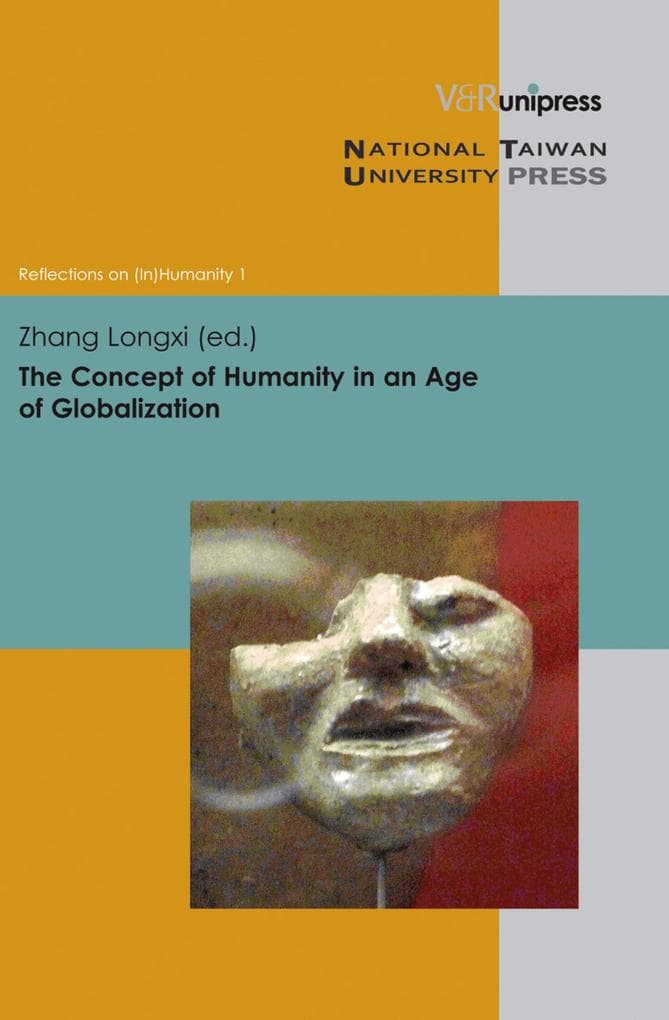
Every human life form encapsulates an idea of humankind and humanity. Today, this very idea is challenged by the various and diverging needs for cultural orientation in the age of globalization. One of the recent attempts to meet these challenges is provided by a new humanism with an intercultural intent. Such humanism can be conceptualized only by the collaborative efforts of different academic disciplines at exploring the human being as the gist of what is meant by humanity. Thus, this volume explores the pertinent fields of knowledge from the perspectives of philosophy, theology, anthropology, sociology, economy, psychology, neurobiology, history, and gender studies. Focusing on the guiding question of what is meant by being a human, the contributions of this volume encompass a fascinating spectrum of insights, which will orientate future discussions on humanity and humanism.
Inhaltsverzeichnis
1;Title Page;3 2;Copyright;4 3;Table of Contents;5 4;Body;7 5;Preface;7 6;Jörn Rüsen: Introduction: Enquiring about Mankind;9 7;I. Foundations;21 8;Gerald Hüther: Neurobiological Approaches to a Better Understanding of Human Nature and Human Values;23 8.1;1. The Unique Plasticity of the Human Brain;23 8.2;2. Stress and the Experience-dependent Organization of Neuronal Connectivity;24 8.3;3. The Influence of Early Affectional Relationships on Brain Development and Behavior;29 8.4;4. A Neurobiological View on the Prerequisites for a Culture of Peace and Non-violence;31 8.5;Summary;34 8.6;References;35 9;Christoph Antweiler: Pan-cultural Universals a Foundation for an Inclusive Humanism;37 9.1;Universals and the Project of a New Humanism;38 9.1.1;1. Pan-cultural Patterns vs. `Human Nature';39 9.1.2;2. Diachronic Universals and Developmental Universals;42 9.1.3;3. The Family of Man: the Problematic Nature of Normative Humanism Exemplified by Popular Concepts of Humanity;47 9.1.4;4. Methods of an Empirical Search for Universals: Comparison between Species and Intercultural Comparison;51 9.1.5;5. The Causes of Universals: Evolution and Much More!;54 9.1.6;6. Towards a Realistic Theory of Culture: Universals within the Context of Intra- and Intercultural Diversity;55 9.1.7;7. Pancultural Structures in World Views Relevant for Humanism;60 9.2;Summary: a Universalizing Approach vs. Relativism and Absolutism;66 10;Georg W. Oesterdiekhoff: Man on the Way Towards Intellectual Growth and Humanity Anthropological Foundations of History and Social Change;69 10.1;Introduction;69 10.2;Developmental Psychology and Piagetian Cross-Cultural Psychology;70 10.3;Logical and Abstract Thinking;74 10.4;Rationality and Superstition;76 10.5;Ordeals and Oracles;77 10.6;Magic;78 10.7;Religion;80 10.8;History of Philosophy and Sciences;82 10.9;The Rise of Industrial Society;83 10.10;The Historical Development of Morals;85 10.11;Freedom and Democracy, Slavery and Dictatorship;88 10.12;Conclusions;
90 11;II. Cultural Manifestations;93 12;Hubert Cancik: Europe Antiquity Humanism;95 12.1;1. Orientation;95 12.2;2. Europe;96 12.2.1;2.1. Myth-History;96 12.2.2;2.2. The Space;97 12.2.3;2.3. The Empire;97 12.3;3. Antiquity;99 12.3.1;3.1. The Epoch and the Model;99 12.3.2;3.2. Contradictions;101 12.4;4. Tradition Reception Renaissance;102 12.4.1;4.1. Italy;102 12.4.2;4.2. Byzantium and Slavonic Culture;105 12.4.3;4.3. Arabian-Islamic Culture;106 12.5;5. Humanity;108 12.5.1;5.1. The Human Condition;108 12.5.2;5.2. Humanitas Cultivation and Compassion;110 12.5.3;5.3. Philanthropy;111 12.6;6. Humanismus;112 12.6.1;6.1. The Pedagogical and Political Definition of the Term;112 12.6.2;6.2. Humanism with an Adjective;114 12.6.3;6.3. Theory and Practice;115 12.7;7. 10th December Human Rights Day;117 13;Heiner Roetz: Confucian Humanism;119 14;Umesh C. Chattopadhyaya: Indian Humanism;139 14.1;1. Introduction;139 14.2;2. Humanistic Ideas in India;140 14.2.1;2.1 Understanding India;140 14.2.2;2.2 Facets of Indian Humanism;143 14.2.2.1;2.2.1 The Pre-Modern India;145 14.2.2.2;2.2.2 The Colonial Period: Modernization of India and Modern Indian Humanism;149 14.2.2.3;2.2.3 The Post-Independence Scenario;155 14.3;3. Conclusions;158 15;Jörn Rüsen: Classical Humanism a Historical Survey;161 15.1;1. What is Classical Humanism?;161 15.2;2. Anthropological Premises;164 15.3;3. Historical Change;166 15.4;4. Archaic Societies;167 15.5;5. Cultural Change in Axial Times;168 15.6;6. Steps towards Modernity;170 15.7;7. The Humanization of Mankind in Modern European History;171 15.7.1;a) Secularization;172 15.7.2;b) Universalization;173 15.7.3;c) Naturalization;174 15.7.4;d) Idealization;176 15.7.5;e) Historicity;177 15.7.6;f) Individualization;179 15.8;8. Steps towards the Future;181 16;Oliver Kozlarek: Man and World in Latin American Humanism;185 16.1;1. Humanism and Politics;186 16.2;2. The Ambivalence of Enlightenment;188 16.3;3. The Long Road to Independence;189 16.4;4. Humanism as a Critique
of Positivism;189 16.5;5. Humanism after the Second World War;194 16.6;6. Perspectives: What We Can Learn from Latin American Humanism;196 17;III. Current Issues;199 18;Günter Dux: Humanism and Its Interpretation in Secular Modernity The Responsibility of Politics for Enabling a Humane Form of Life;201 18.1;1. Humanism as a Postulate of Political Ethics;201 18.2;2. The Historical Turning Point;202 18.3;3. The Secular Understanding of Human Life Forms as Spiritual Forms of Life;204 18.4;4. The Part of History in the Historical-Genetic Understanding of Modernity;205 18.4.1;1. Historical Sequence of Developmental Stages;205 18.4.2;2. The Logic of the Developmental Stages;206 18.4.3;3. The Intrinsic Logic of the Development of Cognition;206 18.5;5. The Transparency of History;208 18.6;6. Humanness as a Problem in a Secularized World;210 18.6.1;1. The Historicity of Life Forms as Part of conditio humana;210 18.6.1.1;1.1. Self-Determination;211 18.7;7. Humanism as a Problem in a Market-driven Society;212 18.8;Conclusion;214 19;Ilse Lenz: Differences of Humanity from the Perspective of Gender Research;217 19.1;Equality and Difference in International Gender Regimes and in Transnational Feminist Networks;219 19.2;Equality and Difference in the Perspective of Gender Research;222 19.3;Postcolonial Feminist Critique;224 19.4;The Perspective of Intersectionality;225 19.5;Inequality and Gender Conflicts;226 19.6;Reflective Universalism;230 20;Jürgen Straub: Personal Identity: A Concept in Humanist Tradition?;233 20.1;Humanism and the Question of Psychological Identity;233 20.2;Identity: Heterogeneous Meanings, First Determinations;240 20.3;The Historical, Cultural and Social Context;242 20.4;Theory of Identity: Basic Differences;243 20.5;Identity and Autonomy;244 20.6;The Triadic Pragma-semantics of Identity, Totality, Multiplicity (Diffusion, Dissociation, Fragmentation);245 20.7;Continuity, Consistency, Coherence;247 20.8;Final Remarks;250 21;Helwig Schmidt-Glintzer: Chances
for a Global Humanism in the Conflict of Cultures;251 21.1;Preliminary Remarks;251 21.2;Man at the Centre;252 21.3;Humanism: More than a Period-term;254 21.4;Doubt and the Disappointment of War;256 21.5;The New Humanism in Posttraditional Societies;257 21.6;The Individual and its World;258 21.7;Four Preconditions for Humanism as a Guiding Concept;259 21.8;Humanism in Functional Terms;262 21.9;The Obstinacy of Cultures;263 21.10;The Clash of Cultures and the Demographic Factor;265 22;Notes on Contributors;267 22.1;Prof. Dr. phil., Dipl. geol. Christoph Antweiler;267 22.2;Prof. Dr. Dr. h.c. Hubert Cancik;267 22.3;Prof. Dr. Umesh Chattopadhyaya (Ph.D., Cantab.);268 22.4;Prof. Dr. Günter Dux;268 22.5;Prof. Dr. rer. nat. Dr. med. habil. Gerald Hüther;268 22.6;Prof. Dr. Oliver Kozlarek;269 22.7;Prof. Dr. Ilse Lenz;269 22.8;PD Dr. Dr. Georg W. Oesterdiekhoff;270 22.9;Prof. Dr. Heiner Roetz;270 22.10;Prof. Dr. Dr. h.c. Jörn Rüsen;270 22.11;Prof. Dr. Helwig Schmidt-Glintzer;271 22.12;Prof. Dr. phil. Jürgen Straub;271 23;Bibliography;273