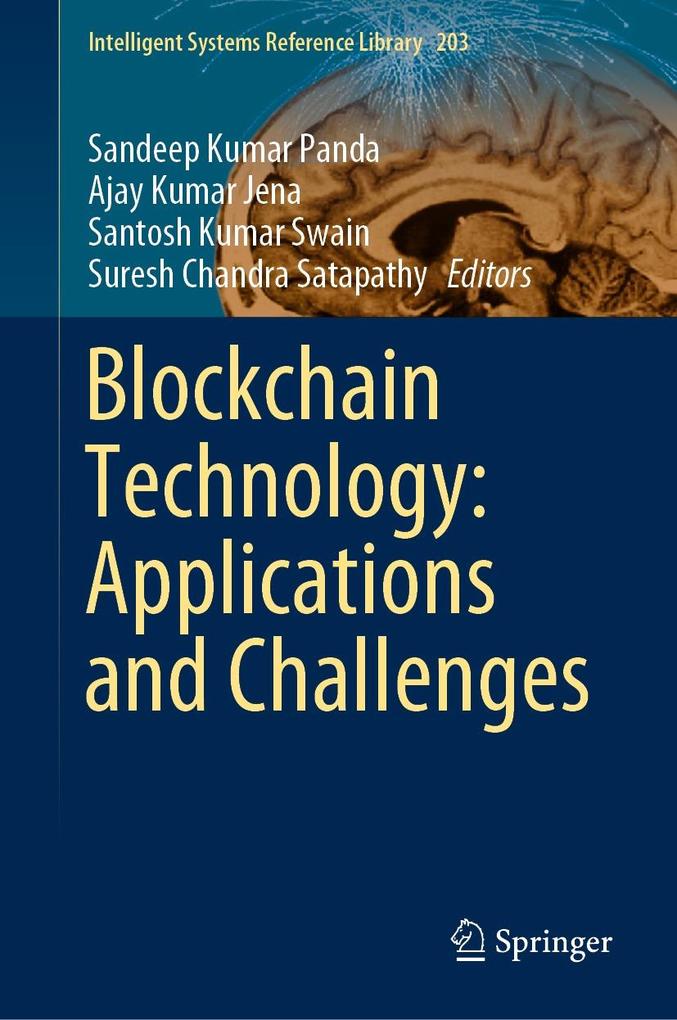
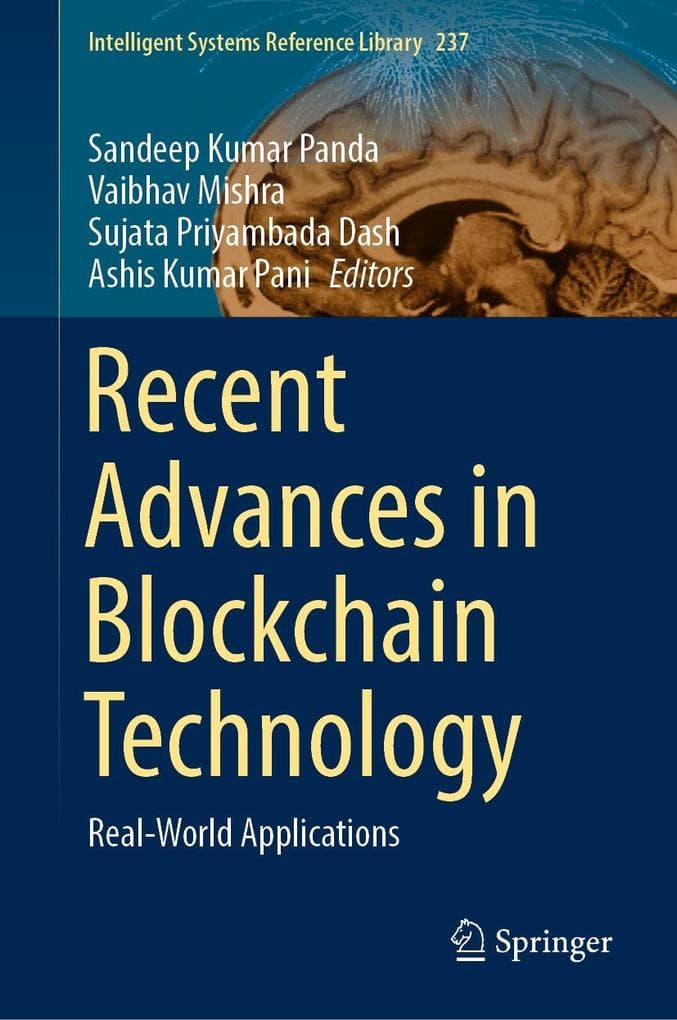
This book discusses the various open issues of blockchain technology, such as the efficiency of blockchain in different domains of digital cryptocurrency, smart contracts, smart education system, smart cities, cloud identity and access, safeguard to cybersecurity and health care. For the first time in human history, people across the world can trust each other and transact over a large peer-to-peer networks without any central authority. This proves that, trust can be built not only by centralized institution but also by protocols and cryptographic mechanisms. The potential and collaboration between organizations and individuals within peer networks make it possible to potentially move to a global collaborative network without centralization. Blockchain is a complex social, economic and technological phenomenon. This questions what the established terminologies of the modern world like currency, trust, economics and exchange would mean. To make any sense, one needs to realize how much insightful and potential it is in the context and the way it is technically developed.
Due to rapid changes in accessing the documents through online transactions and transferring the currency online, many previously used methods are proving insufficient and not secure to solve the problem which arises in the safe and hassle-free transaction.
Nowadays, the world changes rapidly, and a transition flow is also seen in Business Process Management (BPM). The traditional Business Process Management holds good establishment last one to two decades, but, the internal workflow confined in a single organization. They do not manage the workflow process and information across organizations. If they do so, again fall in the same trap as the control transfers to the third party that is centralized server and it leads to tampering the data, and single point of failure. To address these issues, this book highlights a number of unique problems and effective solutions that reflects the state-of-the art in blockchain Technology. This book explores new experiments and yields promising solutions to the current challenges of blockchain technology.
This book is intended for the researchers, academicians, faculties, scientists, blockchain specialists, business management and software industry professionals who will find it beneficial for their research work and set new ideas in the field of blockchain. This book caters research work in many fields of blockchain engineering, and it provides an in-depth knowledge of the fields covered.
Inhaltsverzeichnis
Blockchain Technology Introduction, Applications, Challenges. - A Blockchain Framework for Healthcare Data Management. - Blockchain Technology in Healthcare Opportunities and Challenges. - Blockchain in Healthcare System Security Issues, Attacks and Challenges. - Application of Blockchain as a solution. - UML Conceptual Analysis of Smart Contract for Health Claim Processing.