Bücher versandkostenfrei*100 Tage RückgaberechtAbholung in über 100 Filialen












Fürs Osterfest reduziert: tolino vision color & shine color zum Aktionspreis
Jetzt sparen
mehr erfahren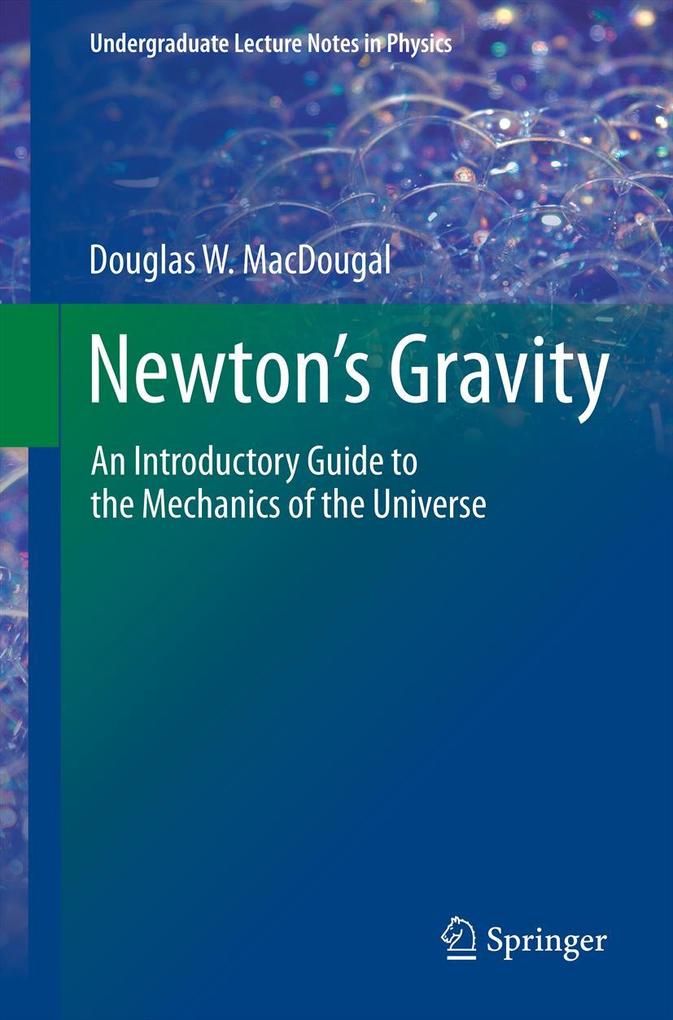
Inhaltsverzeichnis
Preface. - Chapter 1: Introduction - The Twin Mysteries of Mass. - Chapter 2: Galileo' s Great Discovery - How Things Fall. - Chapter 3: Christiaan Huygens' Remarkable Pendulum. - Chapter 4: The Geometry of the Solar System - Kepler' s Laws of Planetary Motion. - Chapter 5: How the Moon Falls Toward the Earth (but keeps missing it). - Chapter 6: Newton' s Moon Test. - Chapter 7: Newton Demonstrate How an Inverse Square Law Could Explain Planetary Motions. - Chapter 8: Newton' s Master Stroke - The Universal Law of Gravitation. - Chapter 9: Determining the Value of g on Earth. - Chapter 10: A Binary System Close to Home - How the Moon and Earth Orbit Each Other. - Chapter 11: Using Kepler' s Third Law to Find the Masses of Stars and Planets. - Chapter 12: Motion in Elliptical Orbits. - Chapter 13: The Energy and Geometry of Orbits. - Chapter 14: Introduction to Spaceflight. - Chapter 15: Getting Oriented - The Sun, the Earth, and the Ecliptic Planet. - Chapter 16: An Introduction to Kepler' s Problem - Finding the True Anomaly of an Orbiting Body. - Chapter 17: What Causes the Tides? . - Chapter 18: Moon, Rings, and the Ripping Forces of Tides. - Chapter 19: Hovering in Space - Those Mysterious Langrangian Points. - Appendix: Solutions. - Index.
From the reviews:
Es wurden noch keine Bewertungen abgegeben. Schreiben Sie die erste Bewertung zu "Newton's Gravity" und helfen Sie damit anderen bei der Kaufentscheidung.