Bücher versandkostenfrei*100 Tage RückgaberechtAbholung in über 100 Filialen
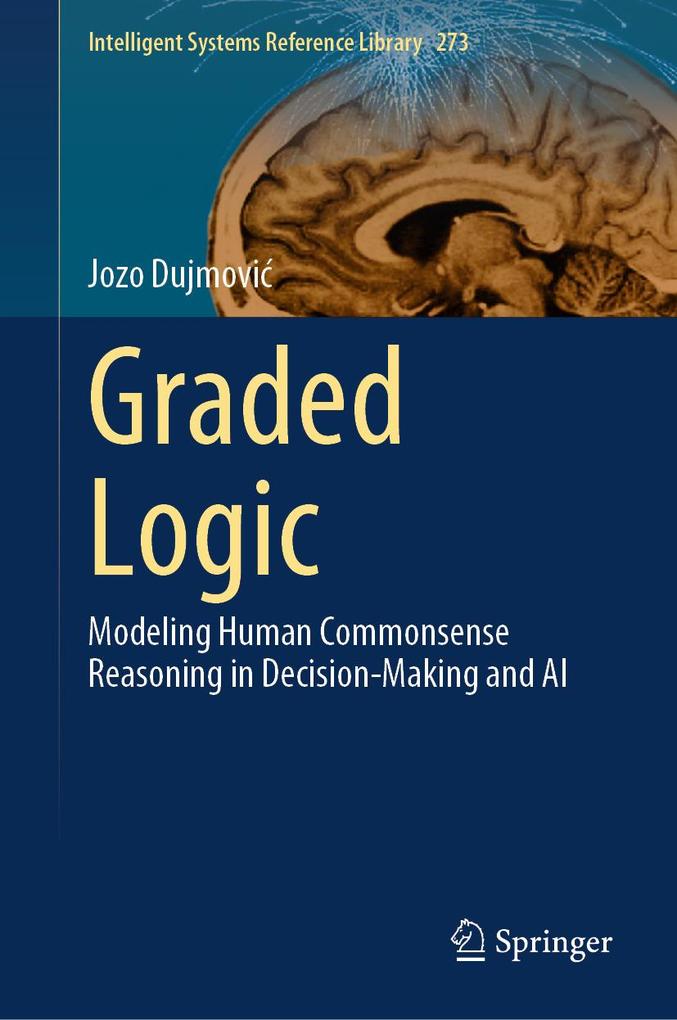
Observable human commonsense reasoning can be modeled with graded propositional logic. Our approach is distinctive in that all mathematical models are directly linked to specific, observable, and explainable mental activities. Decision-makers evaluate alternatives through perceived gradations of truth, importance, suitability, simultaneity, and substitutability. Each graded variable has a semantic identity, reflecting its role and meaning tied to the goals and interests of a specific decision-maker.
Graded logic was introduced 50 years ago, and this book presents its current status based on a half-century of improvements and applications. The book includes examples of decision problems solved using graded logic models. Our aim is to provide readers with a solid theoretical foundation in graded propositional calculus, enabling them to confidently apply the LSP method on complex evaluation and decision problems. Additionally, the book suggests numerous directions for future research and applications.
Inhaltsverzeichnis
Graded Propositional Logic in the Context of Decision Making. - Human Centric Approach to Propositional Logic Commonsense Reasoning and Decision Making. - Postulates of Graded Logic as a Fully Continuum-Valued Propositional Logic.
Es wurden noch keine Bewertungen abgegeben. Schreiben Sie die erste Bewertung zu "Graded Logic" und helfen Sie damit anderen bei der Kaufentscheidung.