Bücher versandkostenfrei*100 Tage Rückgaberecht***Abholung in über 100 Filialen
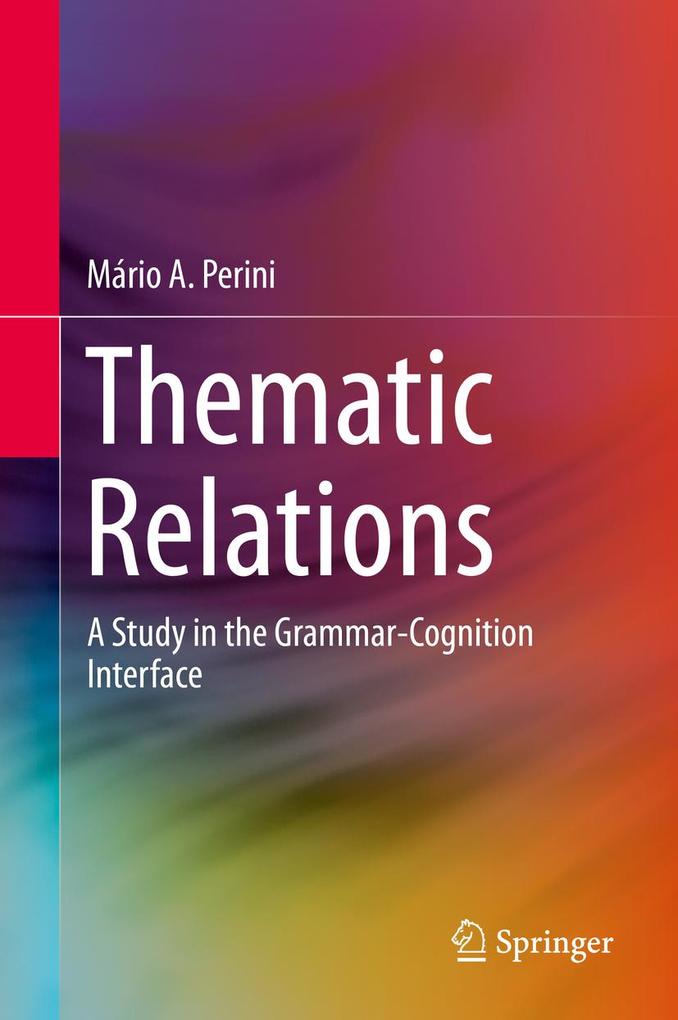
This book presents a proposal to better define thematic relations by exploring the relation between language and cognition. It analyzes the relation between grammatically defined roles such as agent and patient (semantic roles), and elaborate thematic relations (ETRs) actually accessible to language users. It shows that many phenomena previously analyzed as grammatical can be described in a more simple and convenient way by postulating direct connection between syntactic complements and cognitive relations present in the schema evoked by the verb.
Thematic Relations - A Study in the Grammar-Cognition Interface will be a useful resource for practicing linguists working on the analysis of natural languages, in particular on verb valency; verb subcategorization and thematic structure; semantic (thematic) roles, their definition and syntactic coding; the relation between grammatical structure and cognitive schemata (frames); and the structure of the lexicon.
Inhaltsverzeichnis
1 Introduction. - Part I: Grammar and cognition. - 2 Language and cognition. - 3 Semantic role elaboration. - 4 Notes on methodology. - Part II: Valency. - 5 Valency. - 6 The limits of valency. - 7 Assignment by default. - 8 Thematic potential. - 9 Prototypes and prototype rules. - 10 ETRs and semantic roles. - Part III: Descriptive application. - 11 What is a Patient? . - 12 Experiencer, Theme, Goal, and Patient. - 13 Case studies. - 14 Apology of the lexicon. - 15 Results and conclusions.
Es wurden noch keine Bewertungen abgegeben. Schreiben Sie die erste Bewertung zu "Thematic Relations" und helfen Sie damit anderen bei der Kaufentscheidung.