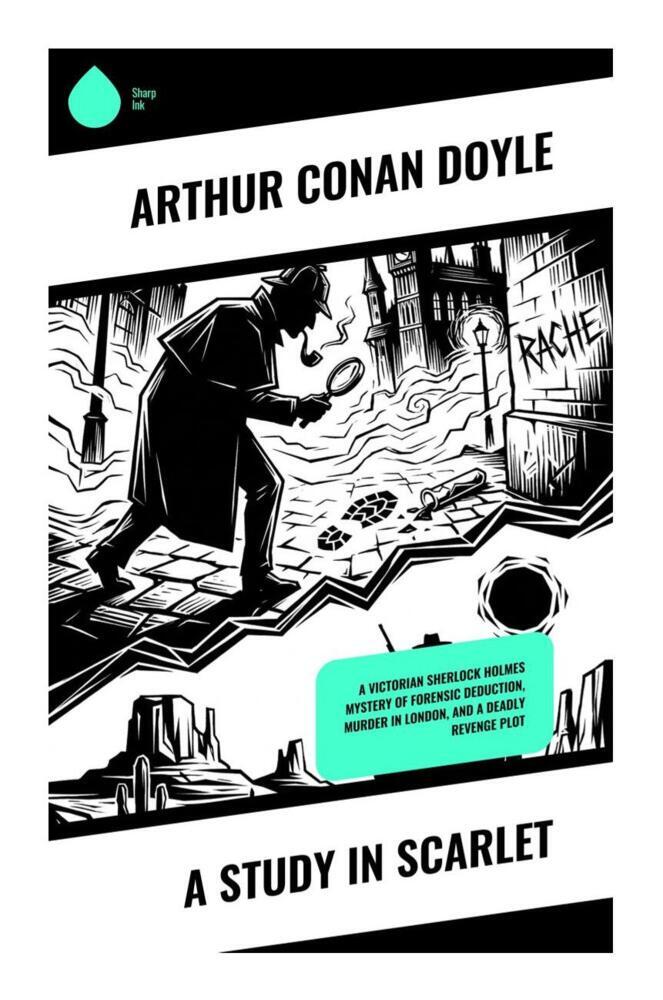
Arthur Conan Doyle's A Study in Scarlet (1887) inaugurates Sherlock Holmes and Dr. John Watson in a detective novel that is at once sensation fiction, forensic puzzle, and imperial-era social narrative. The book begins in fog-bound London with a baffling murder and Holmes's dazzling methods of observation and deduction, then unexpectedly expands into a historical backstory set in the American West. This bifurcated structure, unusual for early detective fiction, reveals Doyle's interest not merely in solving crime but in tracing the moral and social causes behind it. Its brisk prose, memorable characterization, and emphasis on rational inquiry helped define the modern detective genre. Doyle, trained as a physician at the University of Edinburgh, drew heavily on the diagnostic habits of medicine, especially the example of Dr. Joseph Bell, whose acute powers of inference clearly inform Holmes's technique. Writing at a time when scientific thinking was reshaping Victorian culture, Doyle fused clinical observation with popular storytelling. His experience of urban life, professional uncertainty, and magazine publishing also shaped a novel designed to captivate a wide readership while displaying intellectual rigor. This is an essential book for readers interested in the origins of detective fiction, Victorian narrative experiment, or the enduring appeal of Holmes. A Study in Scarlet rewards both first-time readers and seasoned scholars with invention, atmosphere, and literary historical significance.