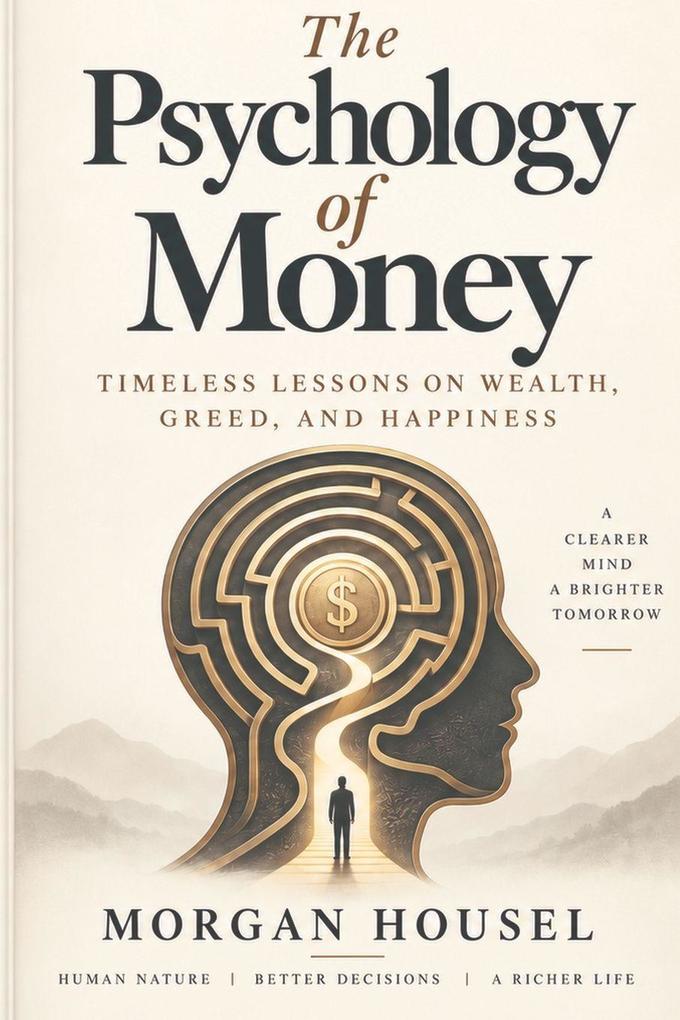
Doing well with money is not only about formulas, forecasts, or financial knowledge. It is also about behavior: how people respond to uncertainty, risk, opportunity, fear, greed, luck, changing goals, and the stories they tell themselves about wealth.
The Psychology of Money explores the human side of personal finance through accessible lessons on saving, investing, compounding, risk, freedom, expectations, pessimism, uncertainty, and the difference between getting wealthy and staying wealthy. It examines why people with similar information can make very different financial decisions, why long-term outcomes often depend on patience and room for error, and why wealth is often defined more by flexibility and independence than by visible spending.
Written for general readers interested in money, investing, economics, and wealth management, the book emphasizes durable financial behavior over purely technical decision-making.