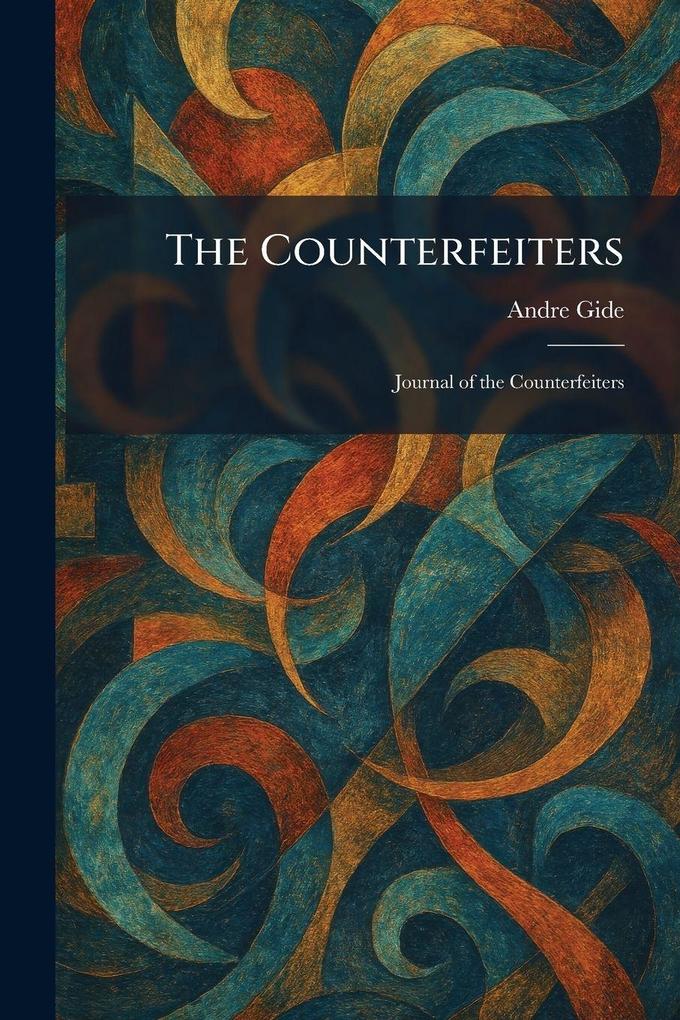
"The Counterfeiters" is a landmark of modernist literature, exploring the intricate web of relationships and the blurry line between reality and art. Set in Paris, the novel follows a diverse cast of characters, including young Edouard, a writer attempting to draft a novel also titled "The Counterfeiters." The plot weaves together themes of adolescent rebellion, the corruption of youth, and the literal and metaphorical circulation of counterfeit currency.
This edition is uniquely paired with the "Journal of the Counterfeiters," Andre Gide's own reflexive account of the novel's creation. Through this journal, readers gain unprecedented insight into the author's creative process, his struggles with form and character, and his philosophical inquiries into the nature of the novel itself. Gide masterfully employs a multi-layered narrative structure that challenges traditional storytelling conventions, making it a seminal work in the evolution of the 20th-century novel.
Rich with psychological depth and intellectual rigor, "The Counterfeiters" remains a profound meditation on authenticity, sincerity, and the power of the written word. It is an essential read for those interested in the history of literary innovation and the complex interplay between life and fiction.
This work has been selected by scholars as being culturally important, and is part of the knowledge base of civilization as we know it. This work was reproduced from the original artifact, and remains as true to the original work as possible. Therefore, you may see the original copyright references, library stamps (as most of these works have been housed in our most important libraries around the world), and other notations in the work.
This work is in the public domain in the United States of America, and possibly other nations. Within the United States, you may freely copy and distribute this work, as no entity (individual or corporate) has a copyright on the body of the work.
As a reproduction of a historical artifact, this work may contain missing or blurred pages, poor pictures, errant marks, etc. Scholars believe, and we concur, that this work is important enough to be preserved, reproduced, and made generally available to the public. We appreciate your support of the preservation process, and thank you for being an important part of keeping this knowledge alive and relevant.