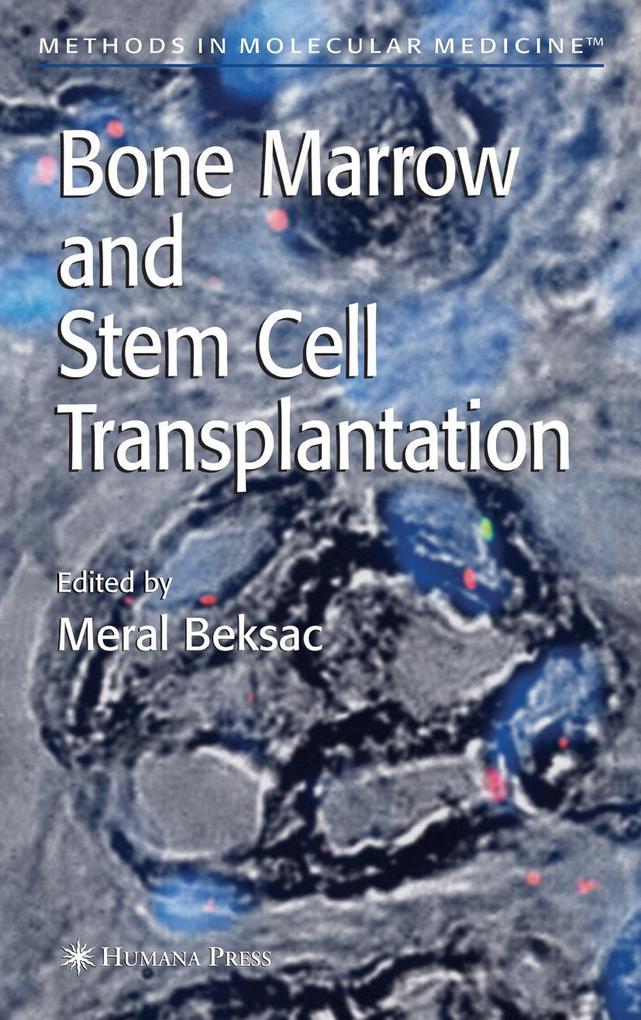
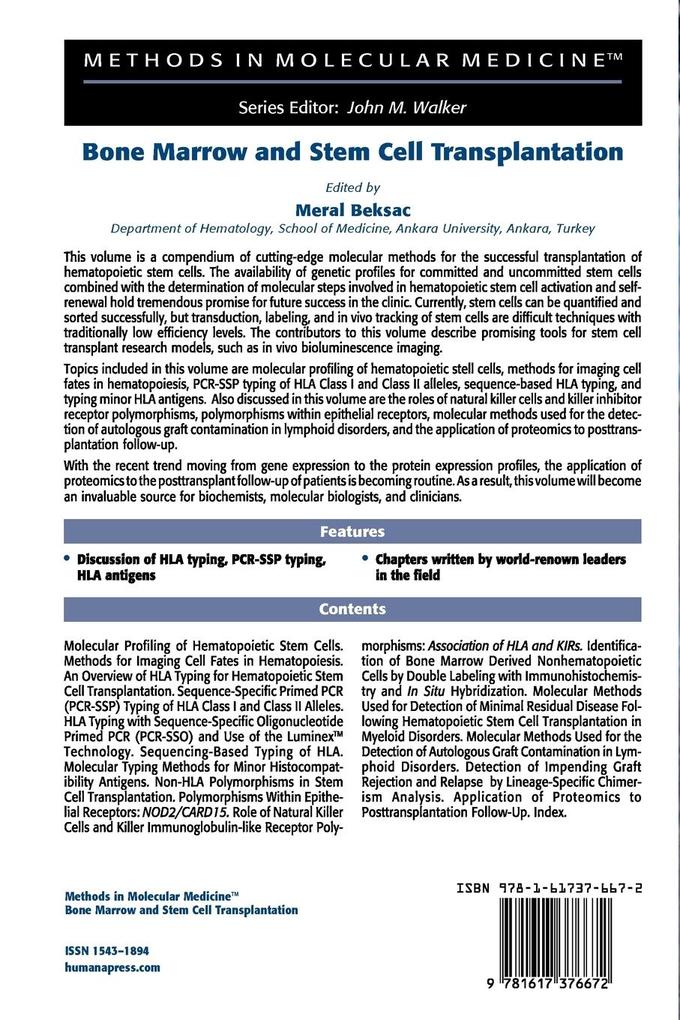
This volume is a compendium of cutting-edge molecular methods for the successful transplantation of hematopoietic stem cells. The contributors are world-renown leaders in the field. They describe promising tools for stem cell transplant research models, such as in vivo bioluminescence imaging. They discuss HLA typing, PCR-SSP typing, and HLA antigens. This volume is an invaluable source for biochemists, molecular biologists, and clinicians.
Molecular Methods: Stem Cell Transplantation presents a compendium of cutting-edge research on the molecular steps involved in hematopoietic stem cell (HSC) activation and self-renewal. The emergence of HLA typing, and the positive impact it has had on the success of clinical transplantation is emphasized and discussed by notable stem cell researchers.
Inhaltsverzeichnis
Molecular Profiling of Hematopoietic Stem Cells. - Methods for Imaging Cell Fates in Hematopoiesis. - An Overview of HLA Typing for Hematopoietic Stem Cell Transplantation. - Sequence-Specific Primed PCR (PCR-SSP) Typing of HLA Class I and Class II Alleles. - HLA Typing with Sequence-Specific Oligonucleotide Primed PCR (PCR-SSO) and Use of the Luminex Technology. - Sequencing-Based Typing of HLA. - Molecular Typing Methods for Minor Histocompatibility Antigens. - Non-HLA Gene Polymorphisms in Stem Cell Transplantation. - Polymorphisms Within Epithelial Receptors. - Role of Natural Killer Cells and Killer Immunoglobulin-Like Receptor Polymorphisms. - Identification of Bone Marrow Derived Nonhematopoietic Cells by Double Labeling with Immunohistochemistry and In Situ Hybridization. - Molecular Methods Used for Detection of Minimal Residual Disease Following Hematopoietic Stem Cell Transplantation in Myeloid Disorders. - Molecular Methods Used for The Detection of Autologous Graft Contamination in Lymphoid Disorders. - Detection of Impending Graft Rejection and Relapse by Lineage-Specific Chimerism Analysis. - Application of Proteomics to Posttransplantational Follow-Up.