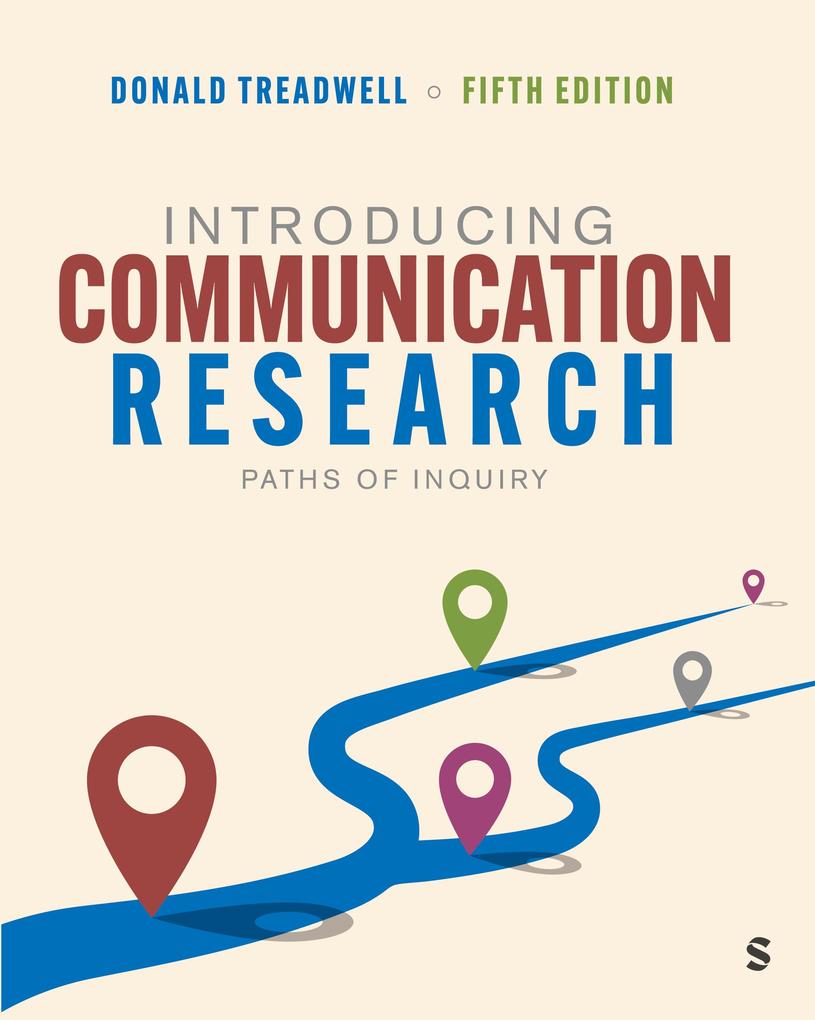
Introducing Communication Research teaches the basics of communication research in an accessible manner by using student-focused real-world examples, engaging application exercises, and up-to-date resources. The Fifth Edition adds coverage of social media and big data, artificial intelligence (AI), and changes in communication brought about by the COVID-19 pandemic.
Introducing Communication Research: Paths of Inquiry teaches students the basics of communication research in an accessible manner by using student-focused real-world examples, engaging application exercises, and up-to-date resources. Donald Treadwell guides readers through the process of conducting communication research and presenting findings for a diversity of audiences, and the book emphasizes the Internet and social media as both topics of, and tools for, communication research. The Fifth Edition adds new pedagogical features, a new social media and big data section in each method chapter, coverage throughout of the impact of artificial intelligence (AI) and particularly in relation to reporting and presenting research; and references the latest research and data sources related to changes in communication brought about by the COVID-19 pandemic.
Included with this title:
LMS Cartridge: Import this title s instructor resources into your school s learning management system (LMS) and save time. Don't use an LMS? You can still access all of the same online resources for this title via the password-protected Instructor Resource Site.
Inhaltsverzeichnis
Chapter 1: Foundations: The Ideas That Shape Our Research
Chapter Overview
Getting Started in Research: Assumptions and Decisions
Starting With Basic Beliefs and Perspectives
General Questions Behind Communication Research
Looking Ahead: Web Worlds, Fuzzy Boundaries and Artificial Intelligence
Examples and Insights: "Better Than Sex"
Chapter 2: Getting Started: From Inspiration to Implementation
Chapter Overview
The Relationship Between Theory and Observations
Starting With a Model or Theory
Starting With "5W+H" Questions
Starting With a Focus
Operationalizing Constructs
Starting With a Purpose
Starting With the Work of Others
The Unavoidable Decisions
Examples and Insights: Facing a Meta/Facebook Furor With Further Findings
Chapter 3: Ethics: Our Responsibilities as Researchers
Chapter Overview
Introduction: Some Ethical Decisions
Ethics Issues in Communication Research
Some Classic Ethical Positions
Two Brief Histories-or Why We Care About Research Ethics
Contemporary Codes of Ethics
Regulations
Peer Review and Institutional Review Boards
What Should I Call You? The Ethics of Involvement
The Internet and Research Ethics
Informed Consent and Debriefing on the Internet
Examples and Insights: Making Consent Forms Shorter
Chapter 4: Resources: Reading, Recording, and Reviewing Research
Chapter Overview
Library Research: Why Bother?
Finding Relevance
Finding Quality
Search Strategies and Techniques
The Literature Review: Writing Your Search Results
Examples and Insights: Predatory Journals
Chapter 5: Measurement: Research Using Numbers
Chapter Overview
What Do Your Head Size, Attitudes, and Readability Have in Common?
Research NOIR
To NOIR Is Not Enough: Reliability and Validity
Two Common Measurement Scales
Communication Research Measures as a Work in Progress
Examples and Insights: Off-the-Shelf Communication Research Measures
Social Media, Big Data, and Measurement
Chapter 6: Sampling: Who, What, and How Many?
Chapter Overview
Introduction
Nonprobability Sampling
Probability Sampling
How Big Does My Sample Have to Be?
Selecting a Sampling Frame
Special Population Sampling
The Future of Sampling
Examples and Insights: Student Participation
Social Media, Big Data, and Sampling
Chapter 7: Statistics: Choosing and Using Quantitative Tools
Chapter Overview
Introduction
But First-Data Cleanup and Categorization
Describing Data: Descriptive Statistics
Inferential Statistics
Assessing Results
Accept or Reject My Findings?
Examples and Insights: Evaluating Quantitative Studies
Big Data: Analysis
Chapter 8: Surveys: Putting Numbers on Opinions
Chapter Overview
Introduction: Advantages and Disadvantages of Surveys
Types Of Surveys
Survey Methods
Writing, Introducing, and Formatting Survey Questions
Survey Wording: "If It Can Be Misinterpreted, It Will Be"
Web and Mobile Survey Design
Improving Survey Response Rates
Using Other People's Surveys
Examples and Insights: Assessing Survey Credibility
Big Data and Surveys
Chapter 9: Experiments: Researching Cause and Effect
Chapter Overview
Introduction: Advantages and Disadvantages of Experiments
Field Experiments and Ex Post Facto Designs
Designing for Control
Factorial Designs
Between-Subjects and Within-Subjects Design
Time Series Analysis
Validity and Experimental Design
Examples and Insights: Researching Selfies
Big Data and Online Experiments
Experiments Revisited
Chapter 10: Content Analysis I: Quantitative Understanding of Words and Images
Chapter Overview
Introduction: Advantages and Disadvantages of Content Analysis
A Basic Content Analysis
Content Analysis of Human Interaction
Coding and Latent Content
Content Analysis as Quantitative and Qualitative
Computer Analysis of Content
Examples and Insights: Predictions From Social Media
Big Data and Content Analysis
Getting Started
Chapter 11: Content Analysis II: Qualitative Understandings of Words and Images
Chapter Overview
Introduction: Advantages and Disadvantages of Qualitative Analyses of Content
Rhetorical Analyses
Narrative, Fantasy, Discourse, and Conversation Analyses
Semiotics and Metaphor
Critical Analyses
Visual Rhetorical Analyses
Examples and Insights: Qualitative Content Analysis and Qualitative Content Analysis
Social Media, Big Data, and Multimodal Analysis
Chapter 12: Observation: Qualitative Understandings of Behaviors and Attitudes
Chapter Overview
Introduction: Advantages and Disadvantages of Qualitative Methods
Qualitative and Quantitative: Similarities and Differences
Researcher-Participant Relationships
Watching and Listening Methods
Making Sense of Qualitative Data
Examples and Insights: Reflexivity and Social Media Research
Social Media, Big Data, and Qualitative Research
Chapter 13: Now What? Reporting and Presenting Research Results
Chapter Overview
Introduction
The Publics of Research
The Voices of Research
Disseminating Research Findings
Visualizing Research Results
Examples and Insights: Researching the Impact of Presentation Media and Audience Interaction
Social Media, Big Data, Visualization, and Artificial Intelligence