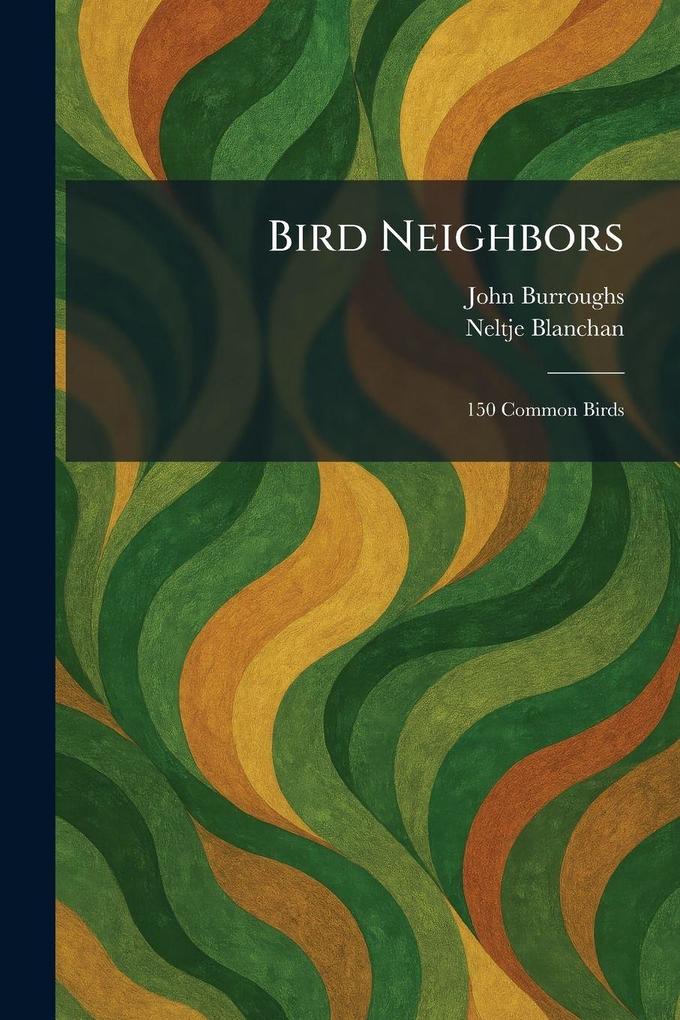
"Bird Neighbors--150 Common Birds" is an essential and enduring guide to the avian life of North America. Written by the celebrated nature writer Neltje Blanchan and featuring an insightful introduction by the renowned naturalist John Burroughs, this work serves as an accessible introduction to the fascinating world of ornithology. The book provides detailed profiles of 150 of the most common bird species found in the fields, forests, and gardens of the United States.
Blanchan's approach is both scientific and poetic, organizing birds by color and other easily observable characteristics to help amateur observers identify their "bird neighbors" with ease. Each entry offers vivid descriptions of plumage, nesting habits, songs, and seasonal migrations, bringing the diverse personalities of these feathered creatures to life. By bridging the gap between technical manuals and popular nature writing, "Bird Neighbors--150 Common Birds" remains a classic resource for birdwatchers and nature enthusiasts. Its emphasis on conservation and the simple joy of observation continues to inspire readers to appreciate the vibrant wildlife that thrives just outside their windows.
This work has been selected by scholars as being culturally important, and is part of the knowledge base of civilization as we know it. This work was reproduced from the original artifact, and remains as true to the original work as possible. Therefore, you may see the original copyright references, library stamps (as most of these works have been housed in our most important libraries around the world), and other notations in the work.
This work is in the public domain in the United States of America, and possibly other nations. Within the United States, you may freely copy and distribute this work, as no entity (individual or corporate) has a copyright on the body of the work.
As a reproduction of a historical artifact, this work may contain missing or blurred pages, poor pictures, errant marks, etc. Scholars believe, and we concur, that this work is important enough to be preserved, reproduced, and made generally available to the public. We appreciate your support of the preservation process, and thank you for being an important part of keeping this knowledge alive and relevant.