Please note that the content of this book primarily consists of articles
available from Wikipedia or other free sources online. The legal status
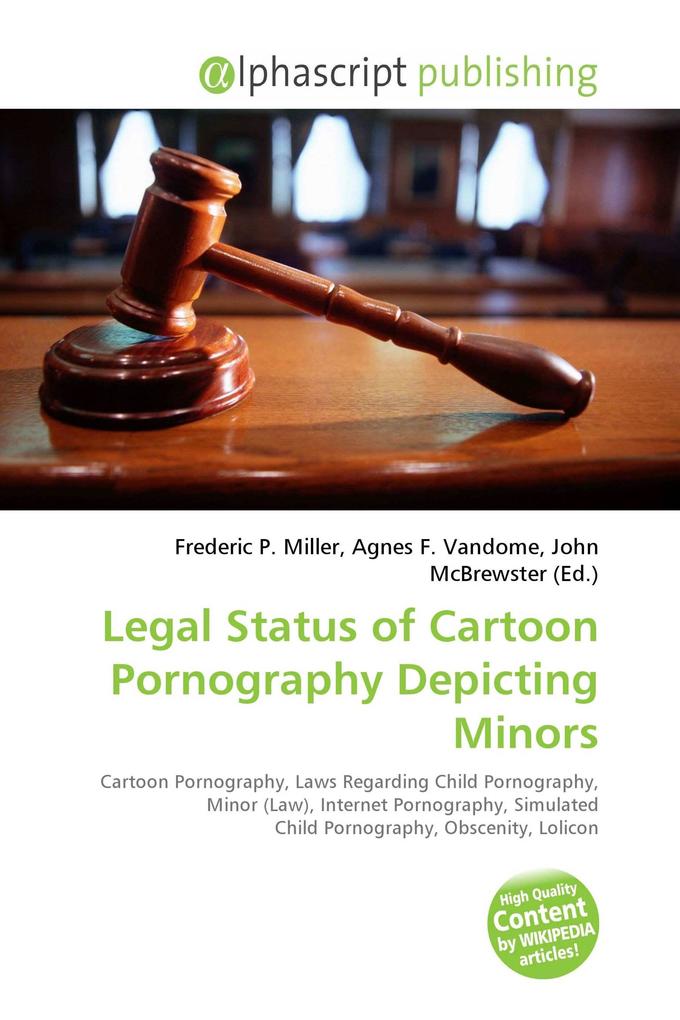
of cartoon pornography depicting minors is a unique subject which
interacts with internet pornography, simulated pornography, obscenity
laws, and specific laws against child pornography. Laws have been
enacted to criminalize "obscene images of children, no matter how they
are made," for inciting abuse. An argument is the claim that obscene
fictional images portray children as sex objects, thereby contributing
to child sexual abuse. This argument has been disputed by the claim that
there is no scientific basis for that connection, and that restricting
sexual expression in drawings or animated games and videos might
actually increase the rate of sexual crime by eliminating an outlet for
desires that could motivate crime. This is exemplified in a case
involving a man, from Virginia who, while arrested after viewing lolicon
at a public library, asserted that he had quit collecting real child
pornography and switched to lolicon.