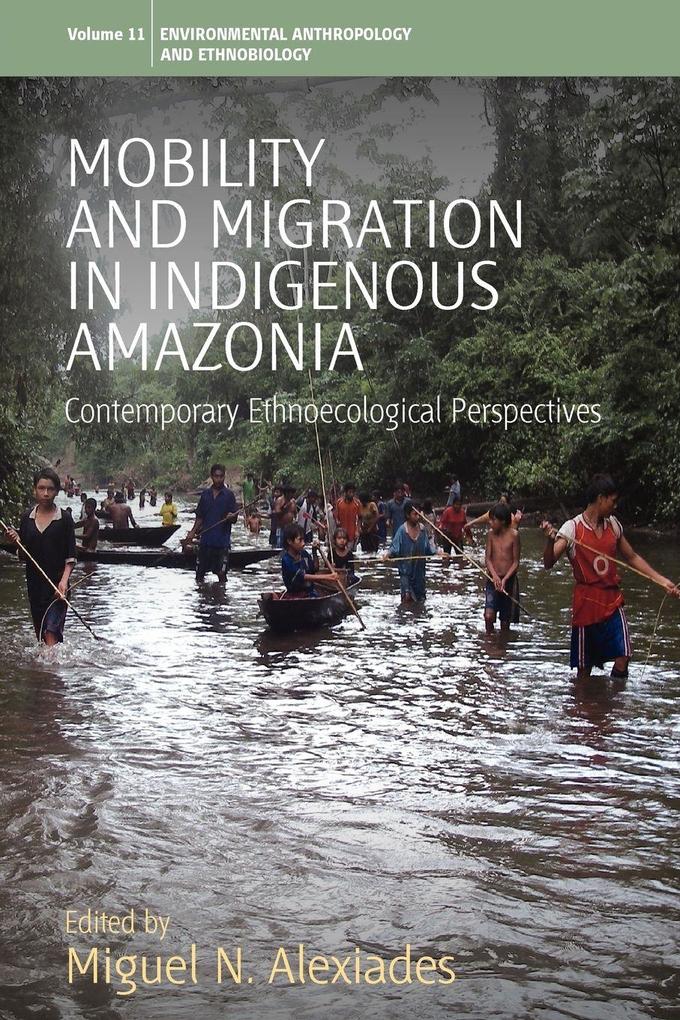
"This volume [by established and emerging scholars] is an important contribution to Indigenous ethnoecological research both within Amazonia and beyond, for it strongly refutes the understanding that Indigenous knowledge and cultures are static and unchanging - This engaging work forces a re-appraisal of such perceptions of Indigenous identity, through uncovering repeated movement, change, adaptation, and ethnoecological genesis amongst the peoples and environments of lowland Amazonia." * Economic Botany "The authors .. make a convincing collective case for an understanding of ecological knowledge as historically contingent in space as well as time, effectively complementing the importance now placed on local historicity with a sense of different ways of inhabiting and relating to space." * JRAI "This is a very rich collection of studies illuminating the complex relations between human movement, exchange, knowledge, and ecology among the native peoples of Amazonia since Pre-Columbian times. It persuades us to change our perspectives on several conventional assumptions about migration, local emplacement, and traditional ecological knowledge. Once again the comparative anthropology of Amazonia has contributed to a decisive transformation in our general understanding of culture, history, and human-environmental relations." * Professor Alf Hornborg, Lund University "Mobility and migrations have always been of significance in the Amazon since people first arrived there. So much information is now brought together in this fascinating book. Evidences from the distribution of languages, plants and people from historic to modern times make this a volume that will be basic reading on the topic for many years to come." * Professor Sir Ghillean Prance FRS, VMH, (Former Director of the Royal Botanic Gardens, Kew), Scientific Director, The Eden Project "The originality and importance of Alexiades' edited volume relates to recent developments in our understanding of Amazonian and its inhabitants. Set in the wider context of this new understanding, the volume not only fully takes on board the fact and implications movement, migration and displacement - rare in itself - but also does so in relation to a very under-explored area, human - environmental relations and the development and transmission of ecological knowledge. It is thus a very welcome initiative that adds a new and important dimension to historicization and regionalization of Amazonian studies." * Stephen Hugh-Jones, Cambridge University