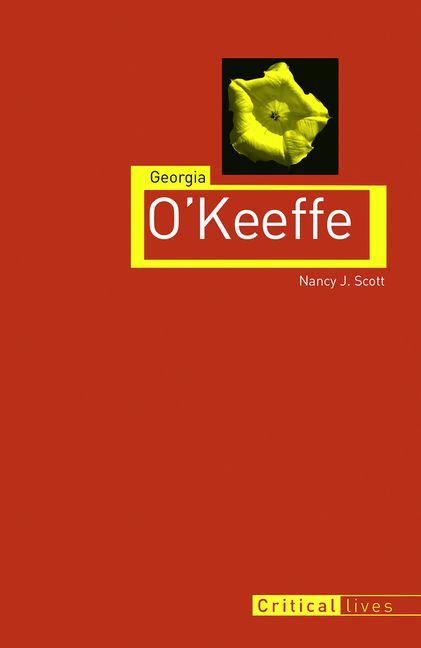
Georgia OKeeffe (1887-1986), the most famous woman artist of American modernism in the twentieth century and a pioneer in shaping abstract art, created an unprecedented, ercely independent and intense world, focused as much on the grandeur of the high desert mesas and cliffs as on the smallest ower. A world has formed around OKeeffe as well, incorporating the photographic nude studies of her by Alfred Stieglitz, a gallery impresario and leading advocate of photography as a ne art as well as OKeeffes mentor and later husband, and the photographs of OKeeffe in her later years.
Nancy J. Scott examines OKeeffes work, its evolution and the conicts between the artists inner self and public personality, using a broad range of sources including many of OKeeffes letters. Her letters exchanged with Stieglitz, long restricted by the terms of OKeeffes will, show that her words could be as revelatory as her painting, as they intimately show her growing love for Stieglitz, and the tumult of their long union as artists.
OKeeffes reputation as a sexually inspired, Freudian-minded artist preceded the reception of her art in the gallery. Neither wholly abstract nor realist, but a melding of realist interpretations of owers, bones, shells, rocks and the landscape, her art is structured with abstract design. She identied the power of landscape, discovered rst in Texas and later in the desert of New Mexico, as a primary inspiration.
Nancy J. Scotts succinct yet comprehensive account of OKeeffes long life and prolic body of work, and her presence at the forefront of American abstract art over eight decades, will both inform and fascinate.
Georgia O Keeffe (1887 1986), the most famous woman artist of American modernism in the 20th century and a pioneer in shaping abstract art, created a world without precedent. O Keeffe expressed the grandeur of her world, the high desert mesas and cliffs as much as the smallest flower, with fierce independence. A world has been created around her as well: from the photographic nude studies of her by Alfred Stieglitz to the photographs of O Keeffe in the desert of New Mexico taken in later years, the artist s own image reflects intensity as well as independence. In this book Nancy Scott examines O Keeffe s work, its evolution, and the conflicts of the artist s inner self and public personality, using a broad range of sources. As a young artist, she dared to make charcoal landscapes of pure abstraction, and this venture brought her to the attention of Alfred Stieglitz, gallery impresario and the leader of photography as a fine art. Stieglitz, obsessed with his discovery of a woman on paper, photographed her in a startling sequence of nudes and compositions detailing neck, arms, and torso. Her reputation as a sexually inspired, Freudian-minded artist preceded the reception of her art in the gallery. O Keeffe s art, neither wholly abstract nor realist but a melding of realist interpretations of flowers, bones, shells, rocks, and the landscape, is structured with abstract design. She identified the power of landscape, discovered first in Texas and later in the desert of New Mexico, as a primary inspiration in art. Her letters, exchanged with her mentor and later husband Alfred Stieglitz, long restricted by the terms of O Keeffe s will, show that her words could be as revelatory as her painting. In this book her voice is heard in intimate revelations of the self, her growing love for Stieglitz, and the tumult of their long union as artists: his settled life between Lake George and New York stifled her need for an independent immersion in nature. Her reputation only continued to grow as she reached a great age, defining her role at the origins of the growth and development of American abstract art. "