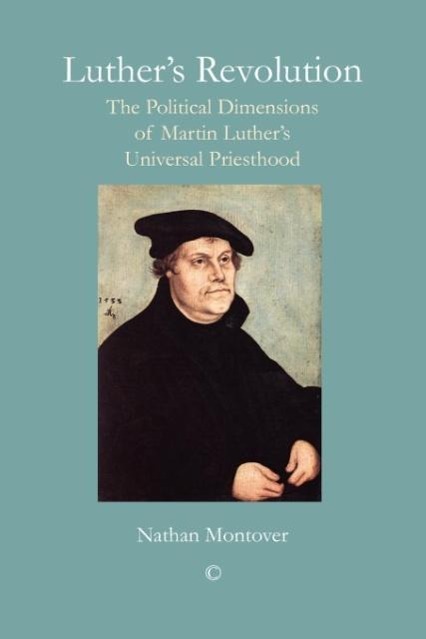
A revision of the traditional image of Luther as a reactionary political figure, revealing the radical social implications of his theological revolution.
Till now history has neglected the utterly radical nature of Luther's thought. In bringing together the political, theological, conceptual and cultural dimensions of Luther's work, Montover brings his readers to an awareness of their truly radical nature.
Luther's understanding of the universal priesthood of believers was not simply another evangelical concept that dealt only with the office of ministry. In serving as a means for reordering the concepts of temporal authority and the temporal order it challenged the cosmological foundations of the political structure of his day.
A compelling work that can only serve to revive the study of this monumental figure of theology.
Inhaltsverzeichnis
Acknowledgments
Introduction
1 Historiographical Assumptions
2 Biographical Appraisals of the Political Dimensions of Luther's Universal Priesthood
3 A Consideration of Luther's Body of Work on the Topic of the Universal Priesthood
4 The Social and Political Context of Papal Claims of Temporal Authority
5 Luther's Response to Claims of Papal Authority in 'To the Christian Nobility of the German Nation'
6 Conclusions and Trajectories for Further Studies
Bibliography
Acknowledgments