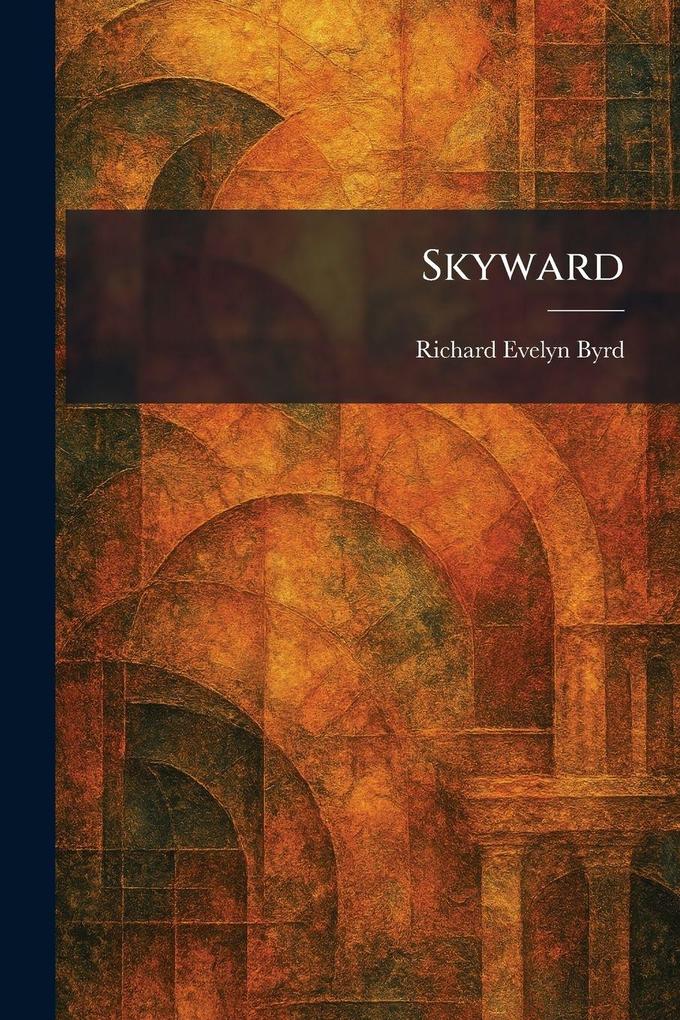
"Skyward" is a gripping first-hand account of the pioneering days of aviation and polar exploration, authored by the legendary Rear Admiral Richard Evelyn Byrd. This memoir chronicles Byrd's relentless pursuit of the skies, detailing his early fascination with flight and his rigorous training as a naval aviator. The narrative reaches its pinnacle with the historic and perilous 1926 expedition to become the first to fly over the North Pole, a feat that captured the world's imagination and cemented Byrd's status as a hero of the Golden Age of Flight.Beyond the technical challenges of early aeronautics, Byrd reflects on the spirit of discovery and the psychological toll of leading expeditions into the Earth's most unforgiving environments. He provides vivid descriptions of the stark Arctic landscape and the mechanical vulnerabilities of the aircraft of the era. "Skyward" serves as both an adventurous chronicle of record-breaking milestones and a thoughtful meditation on the courage required to push the boundaries of human knowledge. It remains an essential work for readers interested in the history of aviation, the legacy of American exploration, and the indomitable will of those who dared to look toward the horizon and beyond.
This work has been selected by scholars as being culturally important, and is part of the knowledge base of civilization as we know it. This work was reproduced from the original artifact, and remains as true to the original work as possible. Therefore, you may see the original copyright references, library stamps (as most of these works have been housed in our most important libraries around the world), and other notations in the work.
This work is in the public domain in the United States of America, and possibly other nations. Within the United States, you may freely copy and distribute this work, as no entity (individual or corporate) has a copyright on the body of the work.
As a reproduction of a historical artifact, this work may contain missing or blurred pages, poor pictures, errant marks, etc. Scholars believe, and we concur, that this work is important enough to be preserved, reproduced, and made generally available to the public. We appreciate your support of the preservation process, and thank you for being an important part of keeping this knowledge alive and relevant.