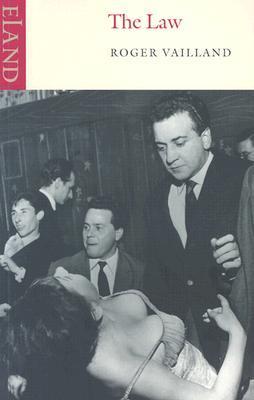
The grotesque game of The Law, played in the taverns of southern Italy in the 1950s, is but a shadow of a fierce attitude to life, a potent metaphor for the hierarchical view of existence which rules over the mezzogiorno, the noonday culture of southern Italy.
In this novel we are not asked to pardon or condemn the passion of Donna Lucrezia, the assured self- centredness of the learned aristocrat Don Cesare or even the sinister desires of Matteo Brigante, the controlling godfather. We are asked merely to observe. In this way The Law reads less like a work of pure fiction and more like a series of shrewdly noted travel sketches.