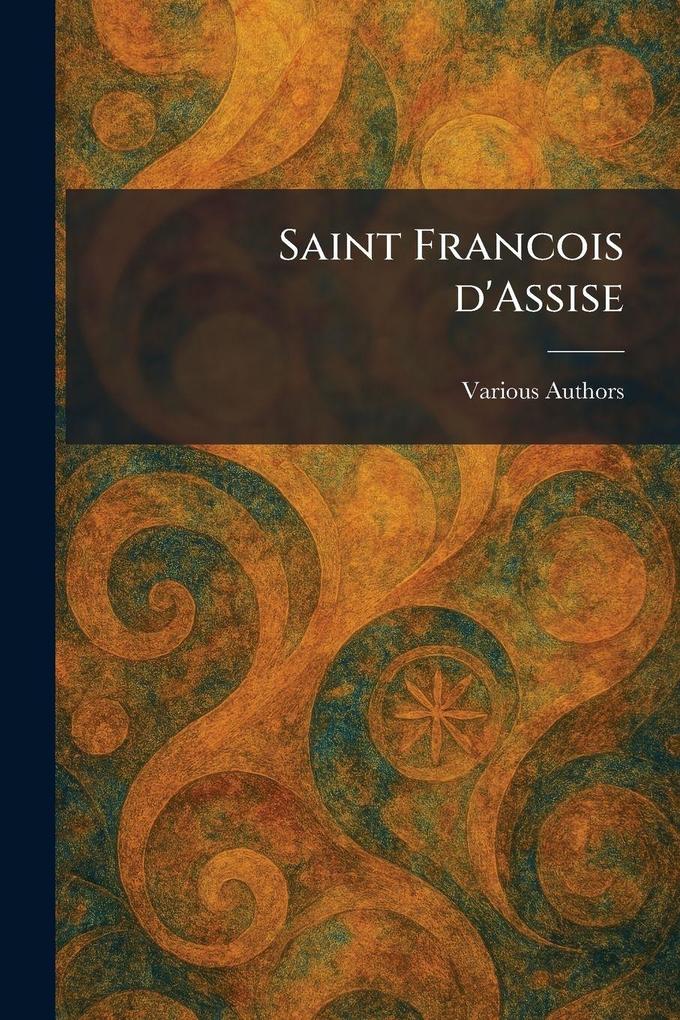
"Saint Francois d'Assise" is a compelling collection that explores the profound life, legacy, and spiritual philosophy of one of the most revered figures in Christian history. Through various accounts and perspectives, the work examines the transformation of Francesco di Bernardone from a wealthy youth in 13th-century Italy to the humble "Poverello" who founded the Franciscan Order. The text captures the essence of his radical commitment to apostolic poverty, his deep compassion for the marginalized, and his unique relationship with the natural world, which famously led him to be regarded as the patron saint of animals and ecology.
This volume provides an in-depth look at the establishment of the Franciscan friars and the enduring influence of the Saint's message of peace and simple living. It details key moments in his life, from his dramatic conversion to the receiving of the stigmata, offering readers a rich tapestry of historical fact and spiritual devotion. "Saint Francois d'Assise" remains a vital resource for those seeking to understand the medieval Church, the history of monasticism, and the timeless appeal of a man whose life continues to inspire movements of social justice and environmental stewardship today.
This work has been selected by scholars as being culturally important, and is part of the knowledge base of civilization as we know it. This work was reproduced from the original artifact, and remains as true to the original work as possible. Therefore, you may see the original copyright references, library stamps (as most of these works have been housed in our most important libraries around the world), and other notations in the work.
This work is in the public domain in the United States of America, and possibly other nations. Within the United States, you may freely copy and distribute this work, as no entity (individual or corporate) has a copyright on the body of the work.
As a reproduction of a historical artifact, this work may contain missing or blurred pages, poor pictures, errant marks, etc. Scholars believe, and we concur, that this work is important enough to be preserved, reproduced, and made generally available to the public. We appreciate your support of the preservation process, and thank you for being an important part of keeping this knowledge alive and relevant.