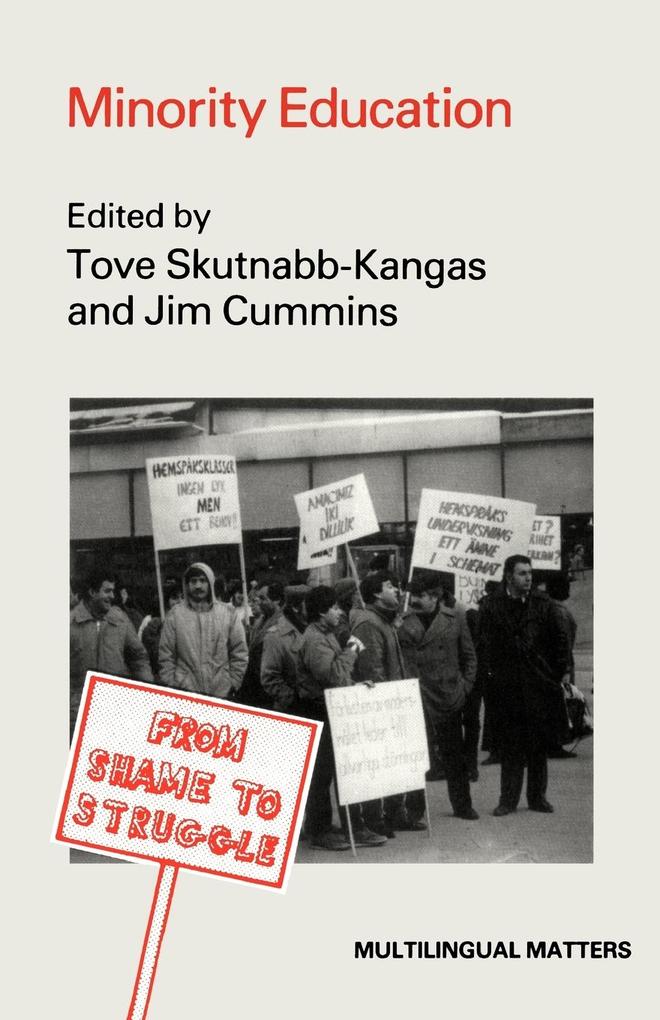
In both Europe and North America during the past 20 years, controversy has surrounded the education of children from linguistic minority backgrounds. An increasing number of minority children are experiencing difficulties at school and many leave school with no formal qualifications. There are fears among many educators and policy-makers that an entire generation of alienated youth with no future prospects is being produced by western educational systems. This book analyses policy issues regarding the education of minority students in western industrialised societies and presents a number of case studies of programs that have been successful in reversing the pattern of minority students' academic failure. A central theme throughout the volume is that the causes of minority students' academic difficulties are rooted in the power relations between the dominant and subordinate groups in society. Schools have typically reflected and reinforced these power relations through strategies such as punishment of children for speaking their mother tongue at school with the result that minority students have not developed confidence in their own cultural identity or academic abilities. Reversal of minority students' school failure requires that educators set out to enable both minority students and communities to empower themselves. The presentation of case studies in which this empowerment has been successfully achieved is complemented by the perspectives of individuals and minority communities who have been involved in the struggle for educational and linguistic rights of minority children.
Inhaltsverzeichnis
Part 1 Sociopolitical analyses: multilingualism and the education of minority children, Tove Skutnabb-Kangas; language policy and language rights in the United States - issues in bilingualism, Eduardo Hernandez-Chavez; the language education of immigrant workers' children in The Netherlands, Rene Appel; the jewel in the crown of the Modern Prince - the new approach to bilingualism in multicultural education in England, Arturo Tosi; active bilingualism - the Swedish goal for immigrant children's language instruction, Gunnar Tingbjorn; from multicultural to anti-racist education - an analysis of programmes and policies in Ontario, Jim Cummins. Part 2 Experiential perspectives: mother tongue and identity, Antti Jalava; poems; living with two languages, Jukka Kalasniemi; returning to Sami identity, Johannes Marainen. Part 3 Community struggles for educational rights: rights and claims of indigenous people - education and the reclaiming of identity - the case of the Canadian natives, the Sami and Australian Aborigines, Deirdre F.Jordan; the Pajaro Valley experience - working with Spanish-speaking parents to develop children's reading and writing skills through the use of children's literature, Alma Flor Ada; Finnish children in Sweden strike for better education, Tuula Honkala et al; resource power and autonomy through discourse in conflict - a Finnish migrant school strike in Sweden, Tove Skutnabb-Kangas; parents, schools and racism - bilingual education in a Northern California town, Jan Curtis; the Carpinteria language minority student experience - from theory to practice to success, S.Jim Campos and H.Robert Keatinge; beyond cultural inclusion - an Inuit example of indigenous educational development, Arlene Stairs; nine years of Finnish-medium education in Sweden - what happens afterwards? - the education of minority children in Botkyrka, Tom Hagman and Jouko Lahdenpera. Part 4 The global context: linguicism - structures and ideologies in linguistic imperialism, Robert Phillipson; racism, ethnicism and etharchy or not? - the principles of progressive control and transformative change, Chris Mullard; monolingual myopia and the petals of the Indian lotus - do many languages divide or unite a nation?, Debi Prasanna Pattanayak; concluding remarks - language for empowerment, Tove Skutnabb-Kangas and Jim Cummins.