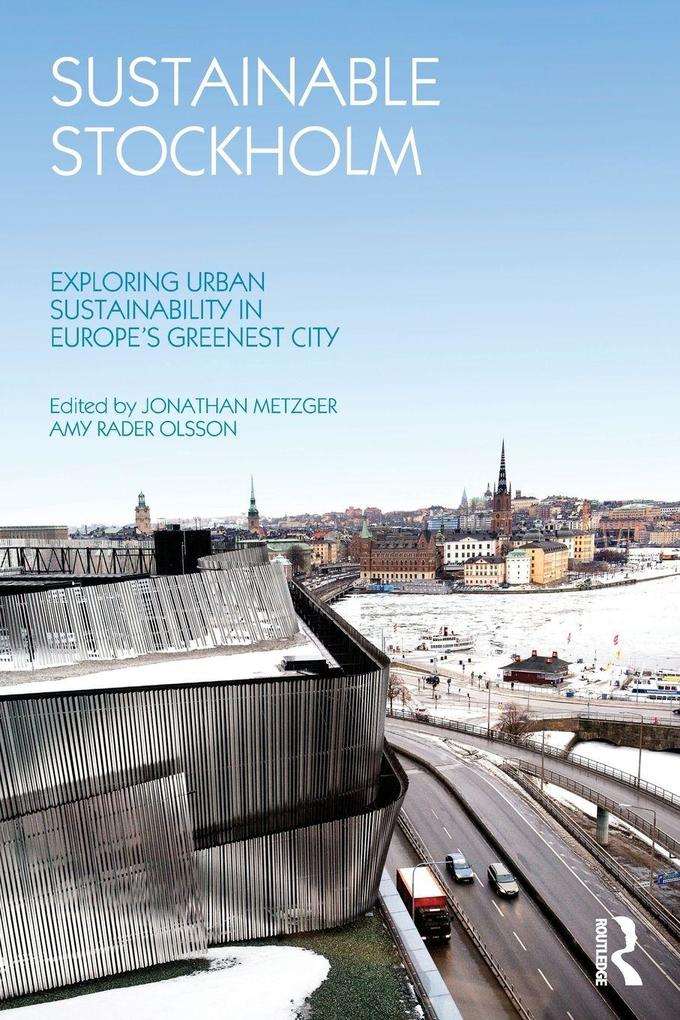
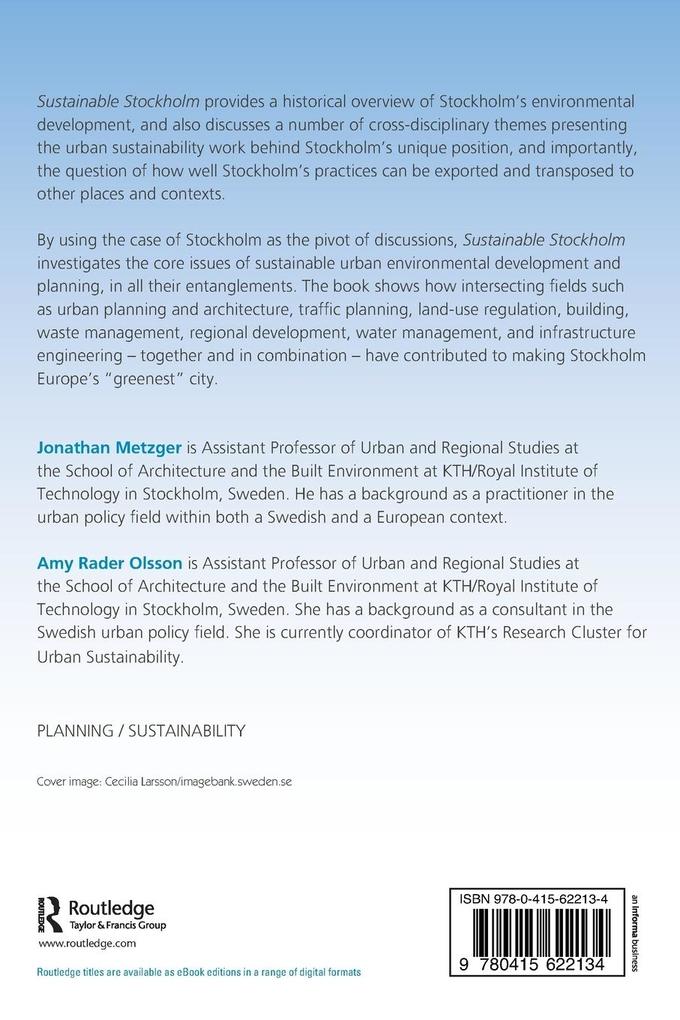
Using the case of Stockholm as the pivot of discussions, this book investigates the core issues of sustainable urban environmental development and planning. The book shows how intersecting fields such as urban planning and architecture, traffic planning, land-use regulation, building, waste management, regional development, water management, infrastructure engineering-together and in combination-have contributed to making Stockholm Europe's "greenest" city.
Inhaltsverzeichnis
Introduction: The Greenest City? From Ugly Duckling to Europe's First Green Capital: A Historical Perspective on the Development of Stockholm's Urban Environment. Using the Concept of Sustainability to Work: Interpretations in Academia, Policy, and Planning. A Sustainable Urban Fabric: The Development and Application of Analytical Urban Design Theory. Sustainable Urban Flows and Networks: Theoretical and Practical Aspects of Infrastructure Development and Planning. the Economics of Green Buildings. Performing Sustainability: Institutions, Inertia and the Practices of Everyday Life. From Eco-Modernizing to Political Ecologizing: Future Challenges For the Green Capital. Urban Sustainable Development the Stockholm Way.