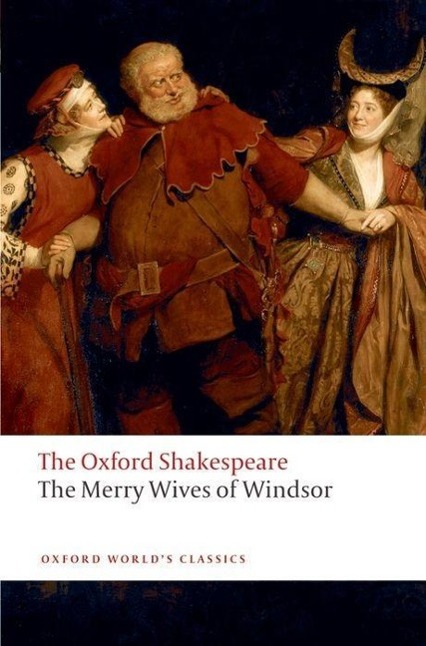
The Merry Wives of Windsor was almost certainly required at short notice for a court occasion in 1597 and Shakespeare threw into it all the creative energy that was going into his Henry IV plays. Falstaff, Pistol, Mistress Quickly, and Justice Shallow all appear in this spirited and warm-hearted `citizen comedy' that combines boisterous action with situational irony and rich characterisation.
In his introduction T W Craik discusses the play's probable occasion (the Garter Feast of 1597 at court), its relationship to Shakespeare's English history plays and to other sources, its textual history (with particular reference to the widely diverging 1623 Folio and 1602 Quarto), its quality as drama, and assesses various interpretations of the play - topical, critical, and theatrical.
When a new play was required at short notice for a court occasion in 1597, Shakespeare created The Merry Wives of Windsor, a warm-hearted and spirited "citizen comedy" filled with boisterous action, situational irony, rich characterization--and the likes of Falstaff, Pistol, Mistress Quickly, and Justice Shallow. In his introduction and commentary, Craik examines a wide range of topics, including the play's probable occasion, its relationship to Shakespeare's English history plays and to other sources, its textual history, with particular reference to the widely diverging 1623 Folio and 1602 Quarto, and its quality as drama. In light of various topical, critical, and theatrical interpretations of the play, Craik pays particular attention to defining the literal sense, proposing some new readings, and evoking the many aspects of the stage business.
Inhaltsverzeichnis
List of illustrations; Introduction: Shakespeare's Garter Play: The occasion and the date of The Merry Wives of Windsor; Shakespeare's English Comedy: The substance and the dramatic structure of the play; Interpretations, critical and theatrical, of the play; The quarto and folio texts; Editorial procedures; Abbreviations and references; THE MERRY WIVES OF WINDSOR; Appendix A: The Textual Crux at 1.1.20-1; Appendix B: Evan's Song in Act 3, Scene 1; Appendix C: Falstaff's Disguise as Herne the Hunter; Appendix D: Alterations to Lineation of the Folio