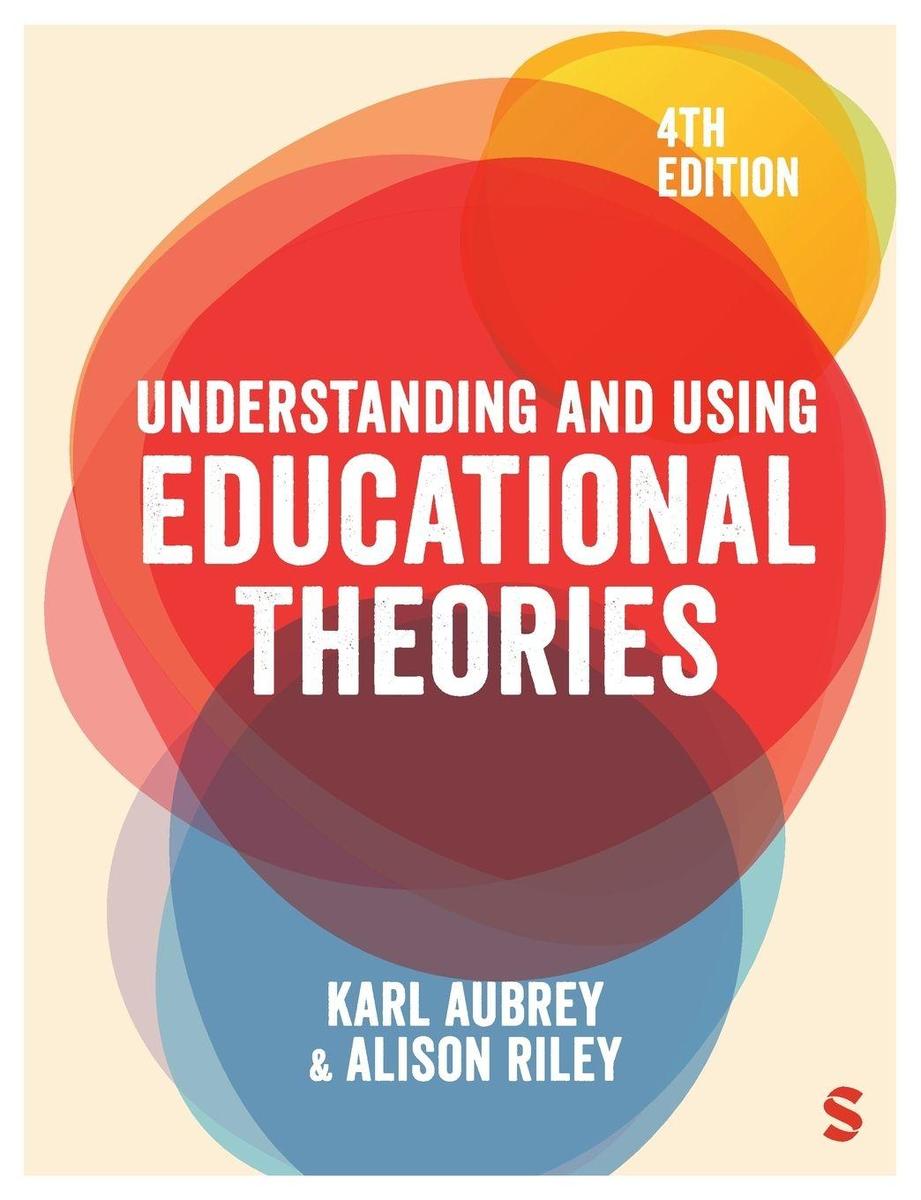
An accessible guide to the theories of 20 major educational thinkers, the strengths and limitations of their ideas, their relevance today and how they can be used in the classroom and other educational settings.
Inhaltsverzeichnis
Introduction
Chapter 1: John Dewey: A democratic notion of learning
Chapter 2: Maria Montessori: Liberating the child
Chapter 3: Jean Piaget: Understanding the mind of the child
Chapter 4: Lev Vygotsky: An early social constructivist viewpoint
Chapter 5: B.F. Skinner: The father of operant conditioning
Chapter 6: Benjamin Bloom: Learning through taxonomies
Chapter 7: Malcolm S. Knowles: Contextualising adult learning
Chapter 8: Jerome Bruner: An evolution of learning theories
Chapter 9: Albert Bandura: Learning through observation
Chapter 10: Urie Bronfenbrenner: The ecology of human development
Chapter 11: Paulo Freire: Oppression, freedom and critical approaches to education
Chapter 12: Donald Schön: Reflection and learning
Chapter 13: David Kolb: Experiential Learning Theory
Chapter 14: Jean Lave and Etienne Wenger: Socially situated learning and communities of practice
Chapter 15: Barak Rosenshine: Principles of instruction
Chapter 16: Daniel Goleman: Emotional intelligence
Chapter 17: Guy Claxton: Learning power
Chapter 18: Dylan Wiliam: Assessment for learning
Chapter 19: Carol Dweck: Mindsets and motivation
Chapter 20: John Sweller: Cognitive Load Theory