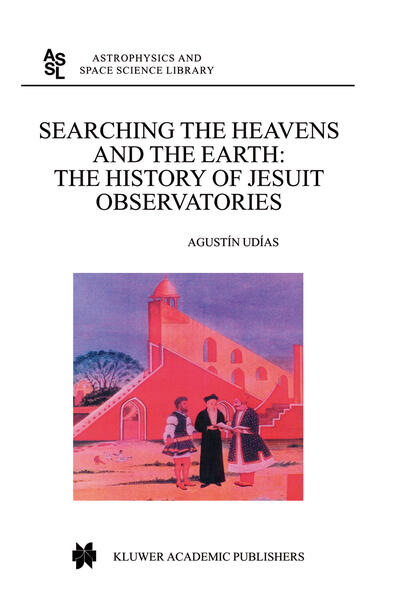
Jesuits established a large number of astronomical, geophysical and meteorological observatories during the 17th and 18th centuries and again during the 19th and 20th centuries throughout the world. The history of these observatories has never been published in a complete form. Many early European astronomical observatories were established in Jesuit colleges.
During the 17th and 18th centuries Jesuits were the first western scientists to enter into contact with China and India. It was through them that western astronomy was first introduced in these countries. They made early astronomical observations in India and China and they directed for 150 years the Imperial Observatory of Beijing.
In the 19th and 20th centuries a new set of observatories were established. Besides astronomy these now included meteorology and geophysics. Jesuits established some of the earliest observatories in Africa, South America and the Far East.
Jesuit observatories constitute an often forgotten chapter of the history of these sciences.
Inhaltsverzeichnis
I. History. - 1. A Jesuit tradition. - 2. Observatories in Jesuit colleges and universities in Europe (1540 1773). - 3. Jesuit astronomers in China, India and other missions (1540 1773). - 4. Europe; astronomy and geophysics (1814 2000). - 5. North America; the Jesuit Seismological Association (1814 2000). - 6. South America; hurricanes and earthquakes (1814 2000). - 7. Asia, Africa and Australia; the great mission observatories (1814 2000). - II. Jesuit Observatories, 1814 2000. . - 1. Europe. - 2. North America. - 3. Central and South America. - 4. Africa, Asia and Australia. - III. Jesuit scientists, 1814 2000. . - Bibliography of Part I, Chapters 1, 2 and 3. . - Index by observatories. - Index by names.