Bücher versandkostenfrei*100 Tage RückgaberechtAbholung in über 100 Filialen











Fürs Osterfest reduziert: tolino vision color & shine color zum Aktionspreis
Jetzt sparen
mehr erfahren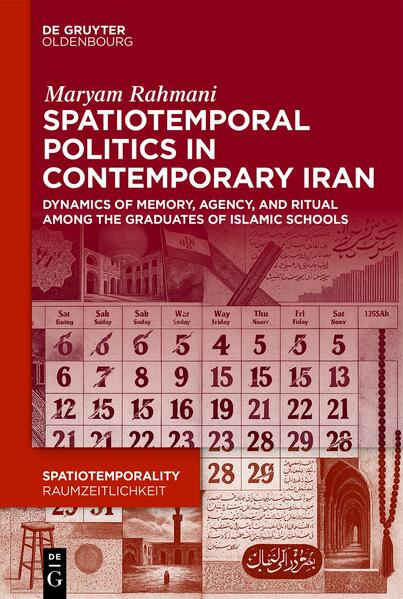
In contemporary Iran, commemorative rituals serve as spatio-temporal tools for fostering social bonds, yet they also represent contested spaces where the state and society negotiate power. The portrayal of the past by state institutions often clashes with how individuals remember, creating a conflictual dynamic. This dissertation investigates these dynamics, focusing on the interplay of competing worldviews.
It examines how the Shi'i Weltanschauung of the Iranian state resonates with the younger generation raised in deeply religious contexts, particularly those born and educated in the first decade following the 1979 Revolution. It analyses how the state re-invents the sacred, deploying ideological platforms to reinforce its vision. It also explores how youth from aligned religious milieus interpret, experience, and remember this vision. These processes reveal how the generation constructs new, sometimes contradictory meanings within the Shi'a utopia the state claims to embody.
Using grounded theory and qualitative interviews, this study highlights the divergences between the state's official narrative and individual memories, showcasing how micro-narratives express agency and resistance. Ultimately, it demonstrates how these narratives contribute to a shared generational knowledge that can challenge, transform, or even merge with the hegemonic Shi'a discourse at pivotal moments.
Die Reihe zielt auf einen interdisziplinären Austausch über Praktiken und Konzepte aus der Doppelperspektive von Raum und Zeit. Räumlichkeit und Zeitlichkeit und ihre unauflösliche Korrelation werden in historischen sowie aktuellen Zusammenhängen und hinsichtlich entsprechender Theorien untersucht. Im Mittelpunkt steht die Bedeutung von RaumZeit im soziokulturell-lebensweltlichen Selbstverständnis der Menschen und in medialen Repräsentationen.
Die Herausgeber:
Dr. Sebastian Dorsch: sebastian. dorsch@uni-erfurt. de
Prof. Dr. Bärbel Frischmann: baerbel. frischmann@uni-erfurt. de
Prof. Dr. Holt Meyer: holt. meyer@uni-erfurt. de
Prof. Dr. Susanne Rau: susanne. rau@uni-erfurt. de
Prof. Dr. Sabine Schmolinsky: sabine. schmolinsky@uni-erfurt. de
Prof. Dr. Katharina Waldner: katharina. waldner@uni-erfurt. de
Editorial Board:
Jean-Marc Besse (Centre national de la recherche scientifique de Paris)
Petr Bilek (Univerzita Karlova v Praze)
Fraya Frehse (Universidade de São Paulo)
Harry Maier (Vancouver School of Theology)
Elisabeth Millán (DePaul University, Chicago)
Simona Slanicka (Universität Bern)
Guillermo Zermeño (Colegio de México)
Es wurden noch keine Bewertungen abgegeben. Schreiben Sie die erste Bewertung zu "Spatiotemporal Politics in Contemporary Iran" und helfen Sie damit anderen bei der Kaufentscheidung.