Sparen Sie zusätzlich 15%11 auf diesen Artikel mit dem Gutscheincode: BLACK15
260,99 €inkl. Mwst.
Zustellung: Mo, 28.12. - Sa, 02.01.27
Versand in 3-4 Wochen
Versandkostenfrei
Empfehlen
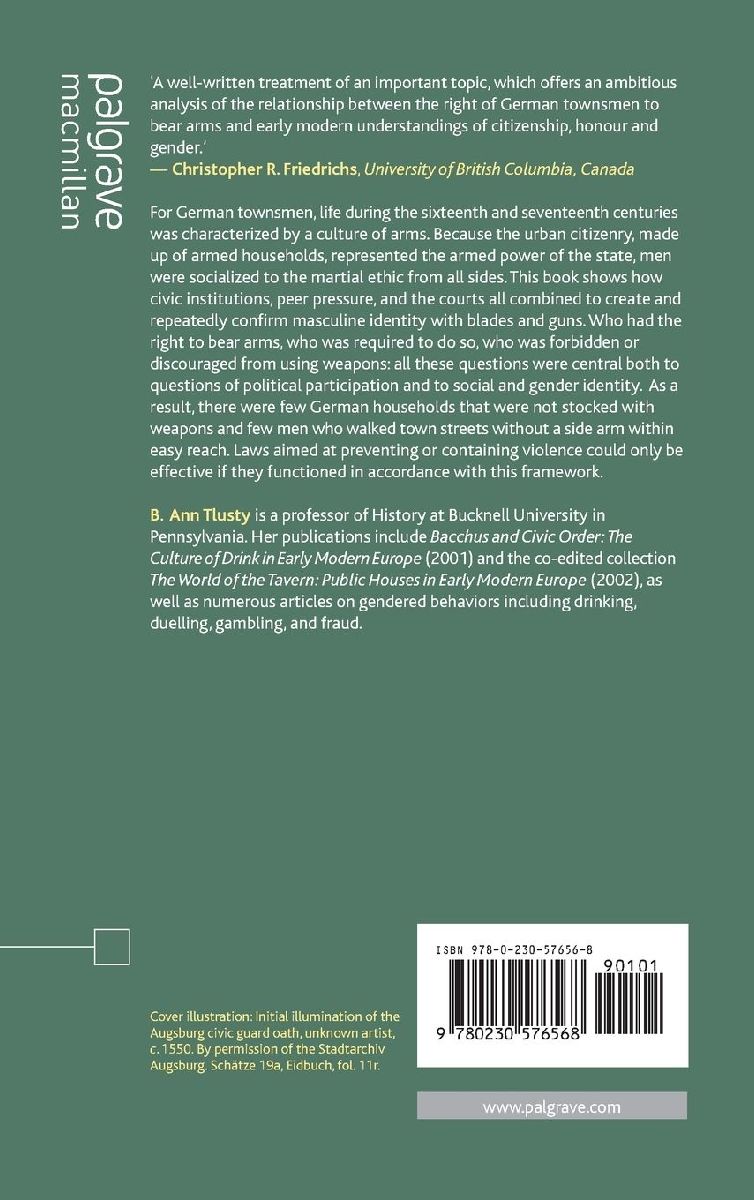
For German townsmen, life during the sixteenth and seventeenth centuries was characterized by a culture of arms, with urban citizenry representing the armed power of the state. This book investigates how men were socialized to the martial ethic from all sides, and how masculine identity was confirmed with blades and guns.
Inhaltsverzeichnis
Introduction Keeping the Peace: Household, Citizenship, and Defense Duty and Disorder Negotiating Armed Power: The Control of Arms and Violence The Age of the Sword: Norms of Honor and Fashion Keeping and Bearing Arms: Norms of Status and Gender In and Out of the Commune: The Social Boundaries of Citizenship Martial Sports and the Technological Challenge Communities in Conflict: Competing Jurisdictions in the Empire Citizens versus the State: Household, Community, and Urban Politics Conclusion Bibliography Index
B ANN TLUSTY Professor of History at Bucknell University in Pennsylvania, USA. Her publications include
Bacchus and Civic Order: The Culture of Drink in Early Modern Europe
(2001) and the co-edited collection
The World of the Tavern: Public Houses in Early Modern Europe
(2002), as well as numerous articles on gendered behaviours including drinking, duelling, gambling, and fraud.
Pressestimmen
'A well-written treatment of an important topic, which offers an ambitious analysis of the relationship between the right of German townsmen to bear arms and early modern understandings of citizenship, honour and gender.' - Christopher R. Friedrichs, University of British Columbia, Canada
'...admirably-organized and lucidly argued study.' -Peter H. Wilson, University of Hull, German History
'This is a highly original and ground-breaking study that brings to life a key aspect of early modern society...Tlusty is the first to fully investigate this martial ethic as part of German politics -a politics, as she keeps emphasizing, best seen as a practice rather than a set of abstract ideas. The unintended effects of this phenomenon are skilfully brought into view as is its longevity.' - Ulinka Rublack, The Journal of Modern History
Bewertungen
0 Bewertungen
Es wurden noch keine Bewertungen abgegeben. Schreiben Sie die erste Bewertung zu "The Martial Ethic in Early Modern Germany" und helfen Sie damit anderen bei der Kaufentscheidung.