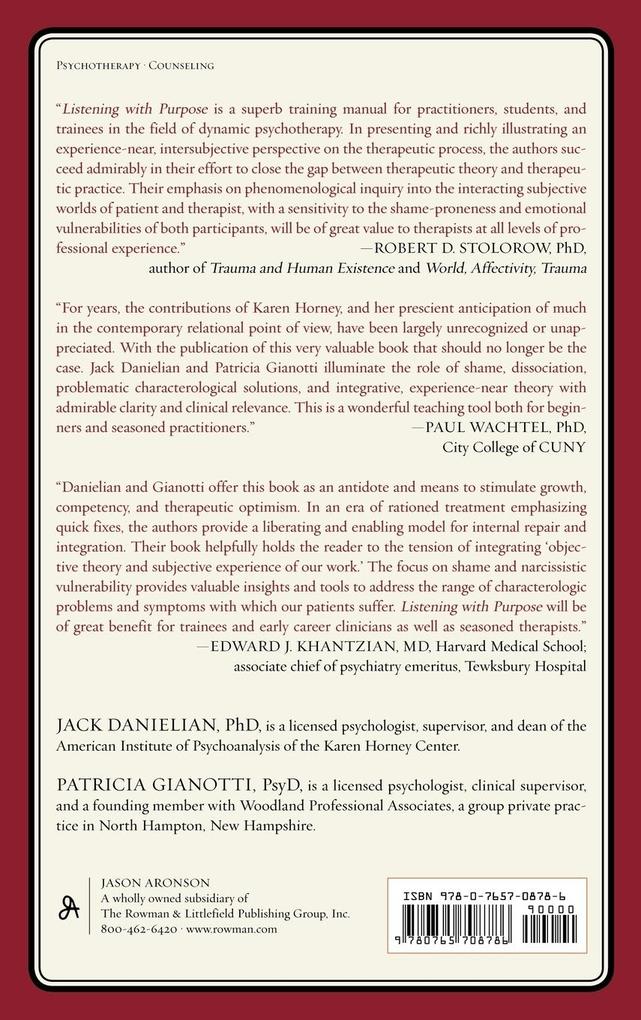
Listening with Purpose is a superb training manual for practitioners, students, and trainees in the field of dynamic psychotherapy. In presenting and richly illustrating an experience-near, intersubjective perspective on the therapeutic process, the authors succeed admirably in their effort to close the gap between therapeutic theory and therapeutic practice. Their emphasis on phenomenological inquiry into the interacting subjective worlds of patient and therapist, with a sensitivity to the shame-proneness and emotional vulnerabilities of both participants, will be of great value to therapists at all levels of professional experience. -- Robert D. Stolorow, Ph.D., author, Trauma and Human Existence For years, the contributions of Karen Horney, and her prescient anticipation of much in the contemporary relational point of view, have been largely unrecognized or unappreciated. With the publication of this very valuable book, that should no longer be the case. Danielian and Gianotti illuminate the role of shame, dissociation, problematic characterological solutions, and integrative, experience-near theory with admirable clarity and clinical relevance. This is a wonderful teaching tool both for beginners and seasoned practitioners. -- Paul L. Wachtel, distinguished professor of psychology at the City College of the City University of New York, and founding director of the Colin Danielian and Gianotti offer this book as an antidote and means to stimulate growth, competency, and therapeutic optimism. In an era of rationed treatment emphasizing quick fixes, the authors provide a liberating and enabling model for internal repair and integration. Their book helpfully holds the reader to the tension of integrating "objective theory and subjective experience of our work." The focus on shame and narcissistic vulnerability provides valuable insights and tools to address the range of characterologic problems and symptoms with which our patients suffer. Listening with Purpose will be of great benefit for trainees and early career clinicians as well as seasoned therapists. -- Edward J. Khantzian M.D., Harvard Medical School; associate chief of psychiatry emeritus, Tewksbury Hospital