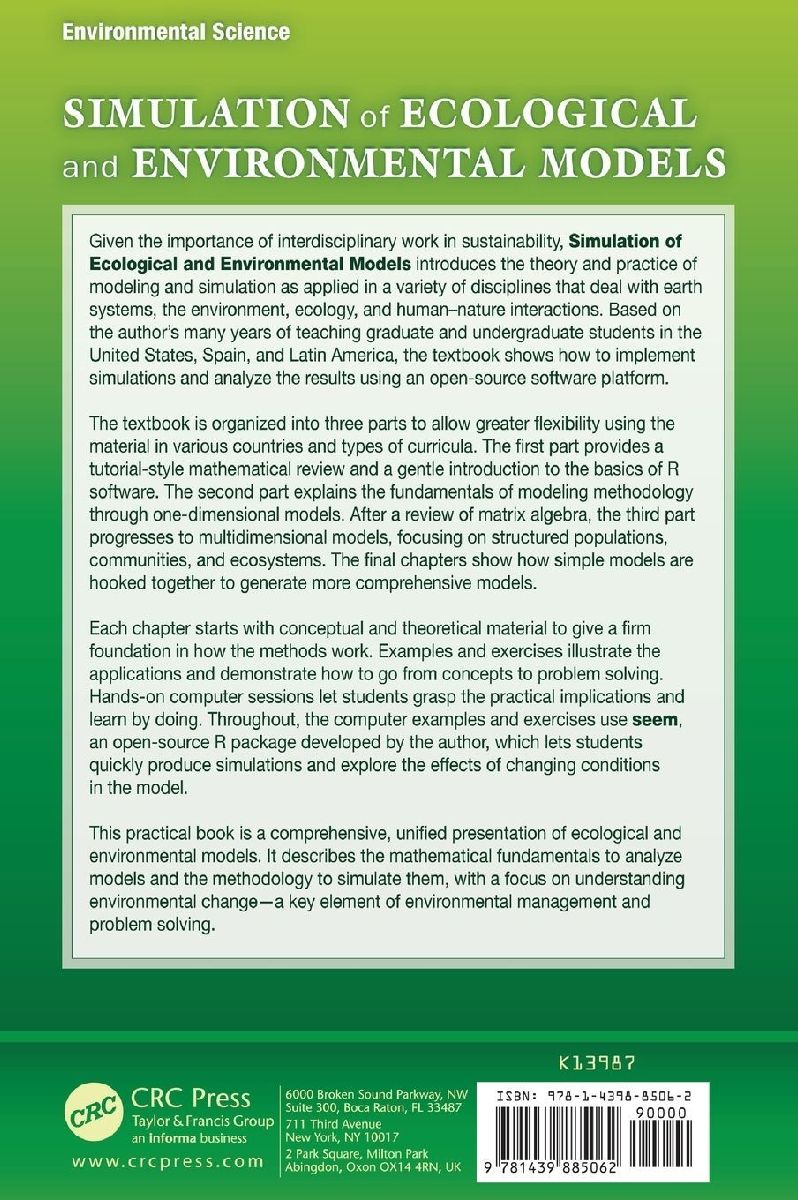
This practical, classroom-tested guide to modeling methodology explains how to implement simulations and analyze the results using a free, open-source software platform. Based on the author's many years of teaching graduate and undergraduate students in several countries, this textbook brings together principles of modeling methods and theoretical foundations for a variety of ecological and environmental models. Theory is accompanied by practical hands-on computer exercises, progressing from easy to difficult. The text also presents a full review of mathematical methods, which makes the book self-contained.
Inhaltsverzeichnis
Part I Introduction, Mathematical Review, and Software Fundamentals: Introduction. Review of Basic Mathematical Concepts and Introduction to R. Part II One-Dimensional Models and Fundamentals of Modeling Methodology: Exponential Model. Model Simulation. Model Evaluation. Nonlinear Models. Stability and Disturbances. Sensitivity Analysis, Response Surfaces, and Scenarios. Part III Multidimensional Models: Structured Populations, Communities, and Ecosystems: Linear Dynamical Systems. Structured Population Models. Ecotoxicological Modeling. Community Dynamics. Ecosystems: Nutrients and Energy. Aquatic Ecosystems. Terrestrial Ecosystems: Soils, Plants, and Water. Terrestrial Ecosystems: Vegetation Dynamics. Bibliography. Index.